BOOTMGR Is Missing on an HP PC: Boot Order and Windows Repair
An HP laptop or desktop can show BOOTMGR is missing before Windows loads. The message can appear after connecting a USB drive, replacing a disk, changing firmware settings, or losing boot files. Repeatedly pressing Ctrl + Alt + Delete will not correct a persistent disk or configuration problem.
Begin by checking the device being started. Factory recovery is a later option because it can remove applications and personal data.
Use the HP startup menu to isolate the problem
- Turn the PC off. Disconnect external storage that is not needed to start Windows, including memory cards left in a reader.
- Turn it on and use the startup-menu key for the exact HP model. Many HP PCs use Esc for Startup Menu and F9 for Boot Device Options, but confirm the labels displayed on your computer.
- Select the installed Windows disk or its Windows Boot Manager entry. If Windows starts, set that entry first in the firmware boot order.
- If the disk is absent or a storage error appears, open the HP hardware diagnostics available for your model and run its short storage test. Record any failure ID.
A failed storage test changes the priority to data protection and disk replacement. Do not repeatedly scan a noisy or unstable drive just to obtain a passing result.
Repair the existing Windows installation
Use installation or recovery media appropriate to your Windows version. On another computer, prepare the media from an official source. This repair USB is separate from the external disk that contains your backups.
- Insert the USB, open the HP boot menu, and choose the entry matching the installed system's UEFI or legacy mode.
- At Windows Setup, choose Repair your computer. On Windows 10/11 select Troubleshoot > Advanced options > Startup Repair. On Windows 7 use Startup Repair in System Recovery Options.
- Select the installation if prompted, let the process finish, and record any error report.
- Remove the USB and restart. If the same message returns, use Command Prompt in recovery for inspection instead of beginning a factory reset.
Run diskpart, list disk, and list volume, then exit. Confirm the Windows volume by checking its Windows folder. A recovery-session letter is not guaranteed to match the letter used during normal operation.
Distinguish missing boot files from firmware changes
On a confirmed legacy BIOS/MBR installation, bootrec /scanos helps identify installations not listed in the boot configuration. bootrec /rebuildbcd can add a recognized installation. Use bootrec /fixmbr only when legacy boot code needs repair; it does not restore deleted Windows files.
On UEFI/GPT systems, the EFI partition and its Windows boot files need to be checked instead. Do not mark partitions active or convert the disk to MBR to follow an unrelated tutorial. If the error started immediately after a firmware reset, restore the known original boot mode before writing new boot data.
A BIOS update is not a routine cure for BOOTMGR errors. Use an HP update only when the exact model's release notes or support instructions address the relevant issue. Keep power connected and follow the documented BitLocker precautions.
Back up recovered personal data before factory recovery
If repairs restore access but you still plan to reinstall Windows, save current files first. A factory image does not contain documents created after purchase.
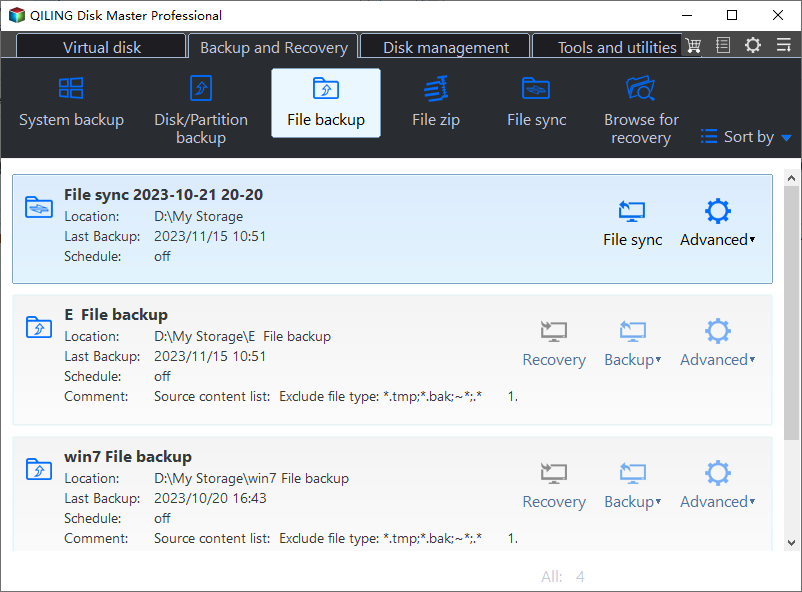
Step 1. With Windows running and the disk stable, attach a separate external drive. Open Qiling Disk Master and select File backup under Backup and Recovery.
Step 2. Use the tree control to select Desktop, Documents, pictures, and any custom work folders. Include files stored outside the usual user folders.
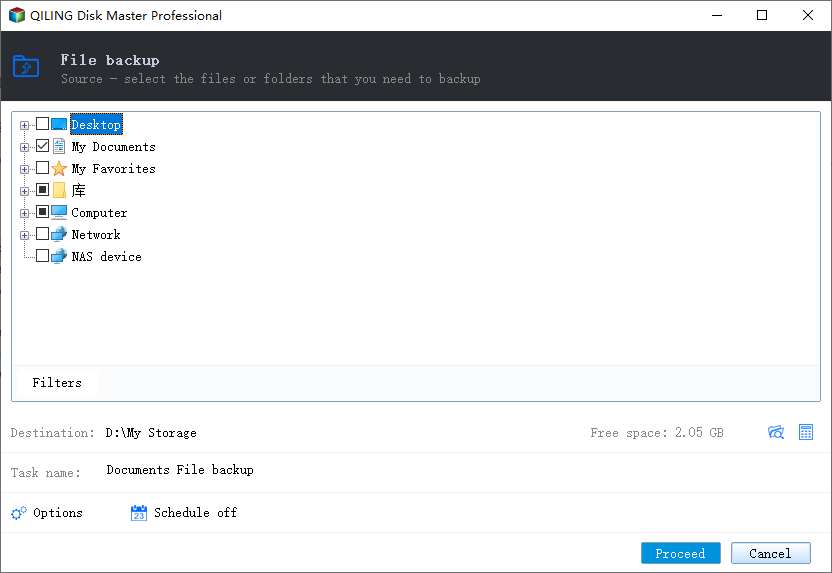
Step 3. Select the external drive as destination. Check the source list and click Proceed. Restore sample files to a test folder and open them before approving any factory recovery.
If Windows cannot start, this normal-Windows backup procedure is not available. Use compatible recovery media or specialist assistance to copy readable data first. After repair, test startup with all repair media removed.
Related Articles
- Repair a Missing BOOTMGR
Compare the startup checks for a Windows boot manager error. - Preserve HP Recovery During a Disk Change
Keep factory recovery requirements in mind when replacing an HP drive.
Products
Articles & Tutorials
- Data Recovery
- Data Backup
- File Recovery
- File Backup
- File synchronize
- System Backup and Restore
- Disk and Partition Clone
- Technical articles
- Disk Master Help
- Windows Deleted File and Disk Recovery Tutorials
- Windows File and Data Recovery Tutorials
- More Windows Tutorials for Install, Security, Files, and PC Tips
- Windows Boot, Repair, and Recovery Environment Tutorials
- Windows Backup Tutorials
- Windows Restore Tutorials
- Windows Clone and Migration Tutorials
- Windows Server Backup, Recovery, and Management Tutorials
- Windows Disk, Partition, and Storage Management Tutorials