How to Perform UEFI System Restore? (2 Ways)
Why need to restore UEFI/EFI?
When the system runs normally, backup is unnecessary. However, if the system fails to boot, you'll need to restore it from a previous backup, which is known as system restore. For UEFI-based computers, this is referred to as UEFI system restore.
UEFI (Unified Extensible Firmware Interface) is a standard firmware interface for PCs, designed to replace BIOS (basic input/output system). The UEFI boot mode is expected to be the norm in new PCs and devices launched with Windows 10/11, and is also supported by PCs running Windows 7. The UEFI firmware interface supports booting from hard drives larger than 2.2TB, which is a limitation of the traditional BIOS.
Now, most new computers are shipped with UEFI boot mode and GPT disk. When you need to reinstall Windows, restore system to dissimilar hardware, or restore to a new hard drive, you need to perform UEFI restore.
Create UEFI Bootable USB Drive in Windows 10/8/7
To perform UEFI restore, you need to boot your computer from a UEFI bootable device. You can create a UEFI bootable USB drive with Qiling Disk Master, which will be used to boot your computer and run the program to complete the restore. The process is quite simple and can be done in just a few steps.
1. Install and launch Qiling Disk Master. Connect a USB drive to your computer. It needs to be detected by the software.
2. Click Tools > Create Bootable Media. Then select the drive type and click Next.

3. Choose a USB drive from the list and click Proceed to start creating a UEFI bootable USB drive.

UEFI System Restore with Bootable USB Drive
After creating a UEFI bootable USB drive, you can perform UEFI system restore. The steps are the same as standard system restore, but you need to boot the computer from the UEFI bootable USB drive instead of the original system.
Step 1. After booting the computer from the UEFI bootable USB drive, you will see the main interface of Qiling Disk Master. Click Restore and choose Select Image File to locate the system image file.
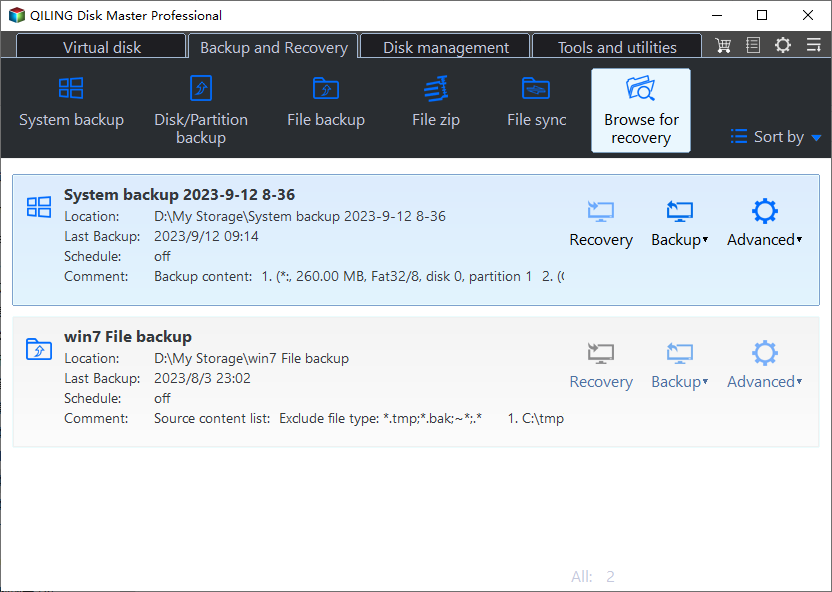
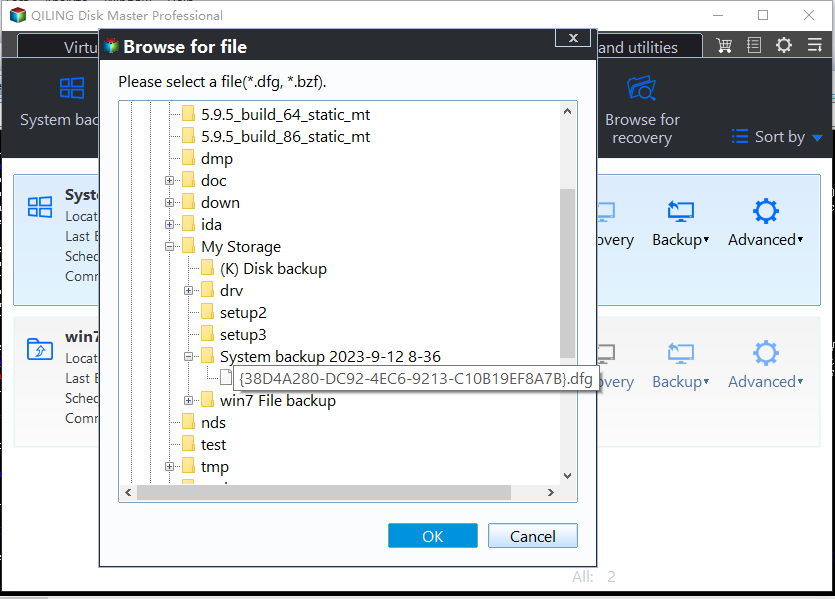
Step 2. Select the system image file and click Next.
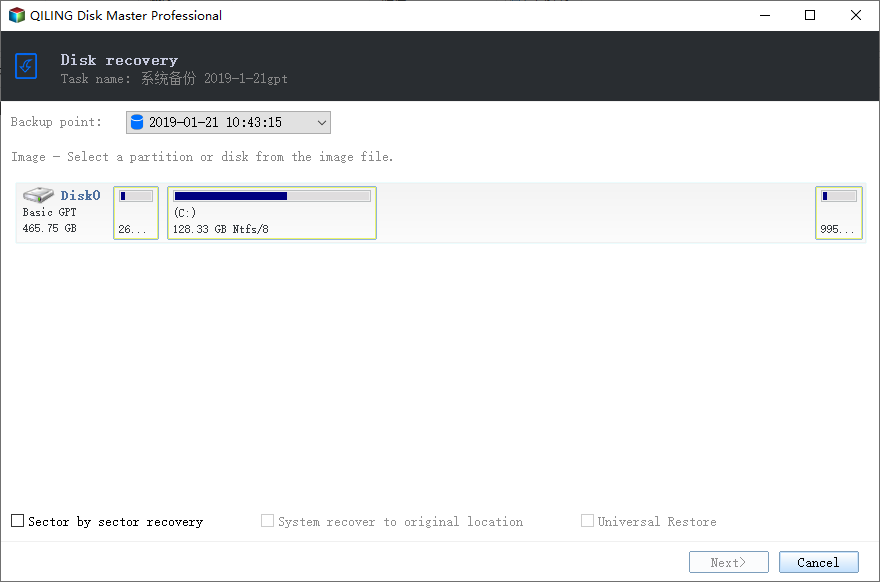
Step 3. Choose to restore the entire system backup or a partition and click Next.
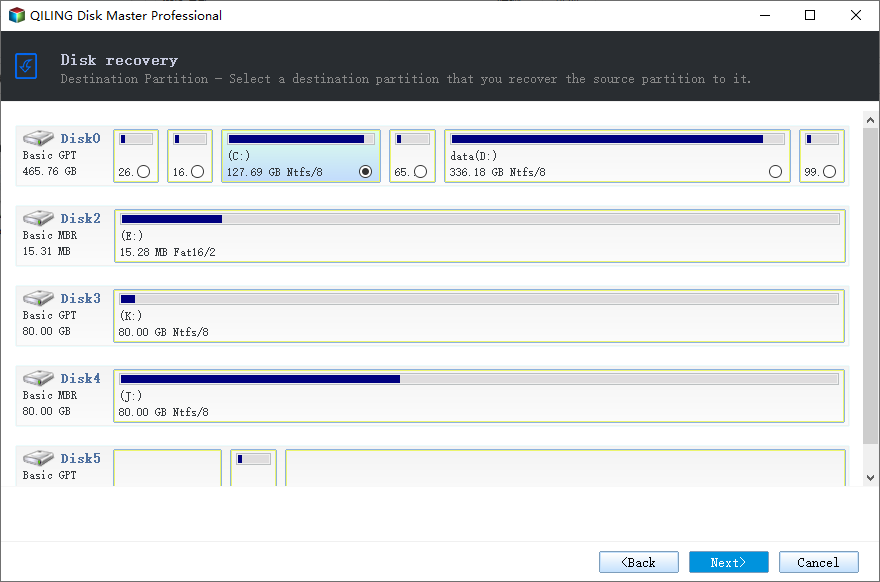
Step 4. Select a destination location to restore to and click Next.
Step 5. Tick "SSD Alignment" if the destination disk is an SSD, and click Proceed to start the UEFI restore.

Further Reading
Check Your Disk
You can check if your disk is MBR or GPT by right-clicking "This PC" > "Manage" > "Disk Management" > right-click the disk where the system is located and select "Properties" > "Volumes".
Convert MBR System Disk to GPT
Right-click the disk. If the "Convert to MBR Disk" option is unavailable, it means the disk is already MBR-style. If "Convert to GPT Disk" is unavailable, it means the disk is already GPT-style. If you need to convert it, you can do so. However, please note that the system on the disk will become unbootable after conversion, so you need to reconfigure the boot mode. You can also directly convert MBR to GPT disk without data loss in Windows 10/8/7.
UEFI Secure Boot
Secure Boot is a security feature of UEFI that ensures the operating system boots only with software that is trusted by the PC manufacturer. It prevents malware from taking over the boot process. If you need to boot from a USB drive or CD, you may need to disable Secure Boot. Here's how to disable UEFI Secure Boot in Windows 10.
Related Articles
Products
Articles & Tutorials
- Data Recovery
- Data Backup
- File Recovery
- File Backup
- File synchronize
- System Backup and Restore
- Disk and Partition Clone
- Technical articles
- Disk Master Help
- Windows Deleted File and Disk Recovery Tutorials
- Windows File and Data Recovery Tutorials
- More Windows Tutorials for Install, Security, Files, and PC Tips
- Windows Boot, Repair, and Recovery Environment Tutorials
- Windows Backup Tutorials
- Windows Restore Tutorials
- Windows Clone and Migration Tutorials
- Windows Server Backup, Recovery, and Management Tutorials
- Windows Disk, Partition, and Storage Management Tutorials