How to Make Dell/HP/Lenovo Recovery Partition Bootable?
Recovery partition not bootable
You installed another version of Windows and now your recovery partition on your HP Pavilion isn't bootable. You can try running the built-in HP Recovery Manager to restore the original recovery partition. Alternatively, you can use the HP Recovery Media Creator to create a new recovery media, which should allow you to boot into the recovery partition. If neither of those options work, you might need to contact HP support for further assistance.
Many manufacturers, such as Dell, ASUS, and Lenovo, provide OEM recovery partitions for their users. However, these partitions are often not bootable, leading to questions on how to make them functional. This post aims to provide guidance on making HP recovery partition bootable in Windows, which is a common issue that users may encounter. By following the steps outlined, users can potentially make their OEM recovery partition bootable, resolving the issue and allowing them to access the recovery tools they need.
Recovery partition becoming unbootable can be caused by various factors, including Windows updates. To resolve this issue, it's essential to investigate the root cause and take corrective measures. This may involve checking for any errors or inconsistencies in the partition's structure or configuration, and performing necessary repairs or updates to restore its bootability.
How to make recovery partition bootable in Windows 10/7?
Tips: here are some specific recovery partition keys for different brands of laptops you may want to know:
- Dell – F8 (F2 for BIOS); F12 for Windows 10;
- HP – F9 (or F10);
- Lenovo – F12;
- ASUS – F9 or ESC;
- Acer – F12;
There are three common ways to get a recovery partition bootable in Windows. Firstly, you can use the built-in System Restore feature to restore the system to a previous point when the recovery partition was bootable. Secondly, you can create a new recovery partition and copy the necessary files from the old recovery partition to the new one, making it bootable.
Assign drive letter to recovery partition
1. Open Disk Management. Right-click the recovery partition and select "Change Drive Letter and Paths".
2. Click Change or Add to assign a desired drive letter.
If you're unable to assign a drive letter to a partition using the built-in Disk Management tool, you may want to try using the command-line utility Diskpart instead. This tool can provide more flexibility and control over disk management tasks, including assigning drive letters to partitions.
1. To open an elevated command prompt, type "Command Prompt" in the search box, right-click on it and select "Run as administrator". Then, type "diskpart" and press Enter.
2. Input following commands successively and hit Enter after each.
- list volume
- select volume # (the volume number of the recovery partition)
- assign letter=# (the desired drive letter)
- exit
If you're still having issues, you may need to change the partition type ID to 0x07 (NTFS) on an MBR disk. If that doesn't work, try the following methods.
Make recovery partition Active
1. Open an elevated command prompt as instructed. Type diskpart and press Enter.
2. Input following commands successively and hit Enter after each.
- list disk
- select disk 0 (the disk where recovery partition locates)
- list partition
- select partition # (the partition number of the recovery partition)
- set id=07 override
- active
- exit
3. Type exit again to leave the command prompt. Restart your PC.
Make recovery partition enabled
1) navigate to the E:/sources folder. 2) type "dism /get-wiminfo /wimfile:E:\sources\install.wim" and press enter. 3) note the index number of the windows version you want to use.
1. Open an elevated command prompt as instructed. Type diskpart and press Enter.
2. Input following commands successively and hit Enter after each.
- reagentc /setosimage /path E:\sources /index 1 /target C:\Windows
- reagentc /enable
- recoverydrive
- exit
3. Restart your computer then.
To make a recovery partition bootable in Windows 7, 10, or other versions, there are three common methods. It's essential to backup your recovery partition before any operations in Windows to prevent data loss. If you don't have an OEM recovery partition for factory resets, you can create a bootable recovery drive for your current computer, protecting your system state.
Better way to create recovery boot drive in Windows 10/8/7
Qiling Disk Master Professional is a powerful and reliable utility that enables creating a bootable recovery partition on Windows systems, compatible with various computer brands such as HP, Dell, Lenovo, Toshiba, and Samsung.
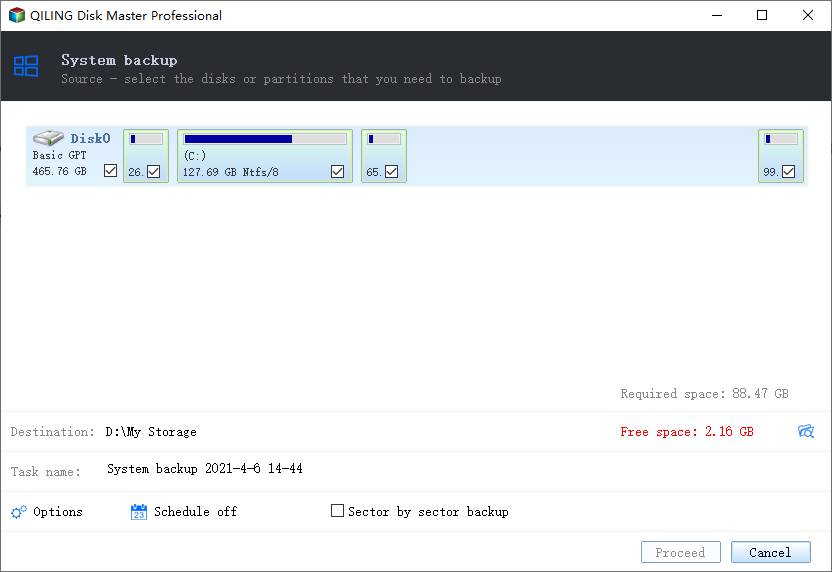
This tool allows you to create a bootable system recovery partition on your current internal disk or external drive, which contains the current system state. You can then easily restore your system by restarting your PC, tapping F11 or A key to access the partition, confirming the operating system, and starting the restore process.
Qiling offers different licensing options to meet various demands. The OneKey Recovery Family License allows registration of up to 4 PCs or servers, while the Technician License permits registration of unlimited PCs or servers. Additionally, Qiling provides a Customization edition for enterprise users, which enables them to customize the software with their exclusive brand and logo. The main interface of the Professional edition is also available, showcasing its features.
- Create a recovery drive, which can also be set up to automatically backup the latest version of the OS on a regular schedule.
- Restore from the bootable recovery partition
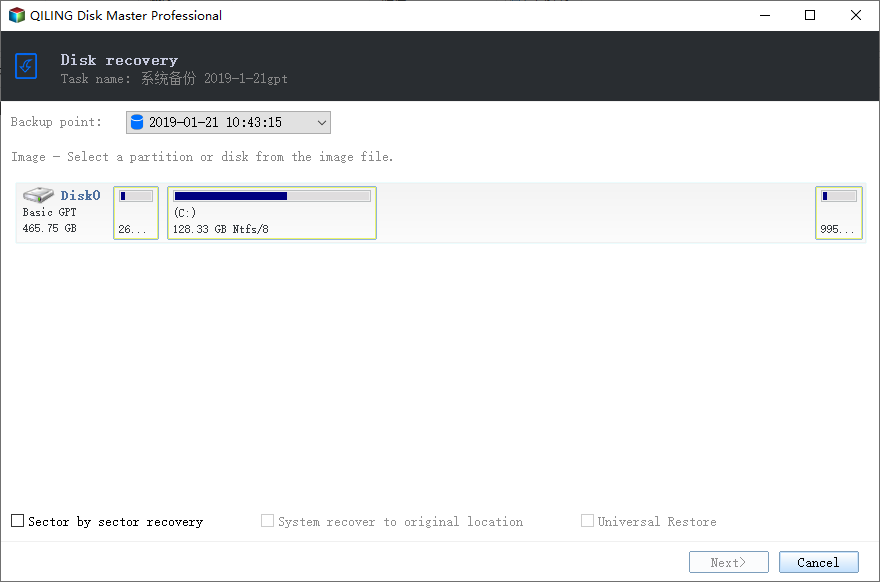
To create a bootable recovery drive for Windows 7, follow the steps on the provided link, and for instructions on how to restore from the drive, refer to the same link.
Summary
Recovery drive not bootable issues can arise on various PCs, including HP, Dell, and Lenovo models, due to different reasons. To resolve this, you can try making the recovery partition bootable in Windows 7 or 10 by following specific procedures for your device. These steps can help you overcome the issue and ensure your recovery drive is functional again.
Qiling also offers its family products, including the Qiling Disk Master Standard, which is a free backup software for Windows PCs that is considered one of the fastest by CNET. It can also be used as a free SSD migration software to clone an entire disk to another. This is in addition to the bootable recovery drive making software mentioned earlier.
Related Articles
- Transfer Visual Studio/Visual C++ to Another Computer
Follow this top-notch guide if you own a Visual Studio or Visual C++ license and want to transfer your Visual Studio/Visual C++ to another computer. Here is a detailed guide on how to transfer visual studio/visual c++ to another computer. - Detailed Comparison | Virus Protection VS Internet Security
This guide explains Detailed Comparison | Virus Protection VS Internet Security with clear steps, key checks, and practical tips. - 3 Best Windows 11 Data Transfer | Tips to Share Files to New Windows 11
This guide explains 3 Best Windows 11 Data Transfer | Tips to Share Files to New Windows 11 with clear steps, key checks, and practical tips. - Windows 11 File History: Create File Backups and System Backup Image
Read the article to learn everything about Windows 11 File History, and how to use File History to create backups of users files, folders, programs, documents, downloads and library. To create a Windows 11 system backup image, you need a Windows 11 File History alternative software. - Clone vs Clean Install: Which Suites You Better
The choice between cloning and clean install alternatives depends on your computer system. If your Windows operating system and hard drive are functioning well, you can use disk/partition cloning software to create a copy of your existing setup. - Clone VS Image | What's the Difference? How to Clone or Image a Hard Drive [Get Full Guides Now]
Learn how to Clone VS Image | What's the Difference How to Clone or Image a Hard Drive with clear steps, key checks, and practical tips.
Products
Articles & Tutorials
- Data Recovery
- Data Backup
- File Recovery
- File Backup
- File synchronize
- System Backup and Restore
- Disk and Partition Clone
- Technical articles
- Disk Master Help
- Windows Deleted File and Disk Recovery Tutorials
- Windows File and Data Recovery Tutorials
- More Windows Tutorials for Install, Security, Files, and PC Tips
- Windows Boot, Repair, and Recovery Environment Tutorials
- Windows Backup Tutorials
- Windows Restore Tutorials
- Windows Clone and Migration Tutorials
- Windows Server Backup, Recovery, and Management Tutorials
- Windows Disk, Partition, and Storage Management Tutorials