How to Restore Onekey Recovery Function After Changing Partition Size?
To resolve the issue, you can try reinstalling the OneKey Recovery software, which should be available on Lenovo's official website. You may also need to re-register the software with your Lenovo account. If the problem persists, you can contact Lenovo's technical support for further assistance. Additionally, you can try using a third-party system recovery software like Qiling Disk Master, which can help you restore your system to a previous state. It's also recommended to create a new system image after extending your C drive to ensure you have a backup in case of any future issues.
Users may encounter issues with Onekey Recovery after changing the partition size on their Lenovo computer. To resolve this, users can restore the Onekey Recovery function by following the steps outlined in this article, which provides a solution to this common problem.
Why can't recover Lenovo One Key Rescue after resizing partitions
This problem is common in many brand computers. Various situations can cause OneKey Recovery malfunction, including software conflicts, hardware issues, corrupted system files, and outdated BIOS or UEFI. Additionally, incorrect configuration, driver problems, and conflicts with other recovery tools can also lead to OneKey Recovery malfunction.
- Have reinstalled system
- Changing the size of the partition on the system disk, such as the C drive or recovery partition, can be a complex task. It requires careful planning and execution to avoid data loss and system instability.
- Wiped the whole disk, including the recovery partition.
Apparently, this problem mentioned above belongs to the second situation.
How to recover Lenovo One Key Rescue after resizing partitions
To rescue your Lenovo OneKey Recovery, follow these steps: assuming the recovery partition is intact, you can recover your system by accessing the recovery partition from the boot menu or by booting from a Lenovo OneKey Recovery USB drive, then selecting the 'System Recovery' option to restore your system to its original state.
1. Press the "novo" button to enter OKR.
2. Select OneKey Recovery Option.
3. When you see the next screen, please press Ctrl + Shift + O to start up Command Prompt.
4. You should check if all partitions have the correct letters, and if so, type "all good".
dir C:
If the Windows version is not correctly identified as "Windows7_OS", you should check the standard list of folders, which typically includes "Program Files", "Users", and "Windows", among others.
5. To verify which drive letter the recovery partition is, try all letters of the alphabet until you see the volume label "LENOVO_PART" and a list of folders including EFI, NB, OKRBackup, or OneKey.
dir d:
dir e:
dir f:
dir g:
......
6. Change to the lenovo_part partition. If it is the G: drive, just type `C:\>G:`. If it is the H: drive, type `C:\>H:`.
g:
Again, your letter may be different.
7. Enter recovery image tool folder. Type:
cd onekey\osimage
8. Run OSImage. Type:
osimage /fb
9. Once the backup process is complete, you'll receive a success message. Any other message can be ignored. You can proceed with your next step.
dir \okrbackup\factory
Wait for the backup to finish, which should take about 25 minutes, and look out for the "Backup Success ..." message at the end, while ignoring any other error messages in the window.
10. Check backup image. Type:
dir \okrbackup\factory
11. To fix the issue, you can simply shut down the command prompt and then either reboot your system or test your recovery image. This should resolve the problem.
Based on online advice, you can restore the Onekey recovery function after resizing a partition, but there's a catch: the recovery partition is usually hidden unless you assign a drive letter to it. This makes it difficult to use this method if your computer crashes and the partition is hidden. Therefore, this method may only work for computers that can still boot normally after resizing. To make it work, you can assign a drive letter to the hidden recovery partition and make it visible, then follow the usual steps to fix the recovery partition.
Better way to restore onekey recovery function
Due to all flaws of Built-in recovery software, from my perspective, many recovery tools have improved their functions, but Qiling Disk Master stands out in one key aspect: restoring system image after resizing partition. While other software may have enhanced features, Qiling Disk Master's ability to easily and safely back up all Windows computers and then restore the system image with just one key press is a game-changer, making it a vital tool for anyone in need of reliable recovery software.
Download the tool to have a try:
How to restore system after changing partition size
To conduct this experiment, use Qiling Disk Master to back up the system and create a Qiling recovery partition. Then, resize the C: drive or partition size, as shown in the picture, by shrinking the C drive. Finally, restore the system using Qiling Disk Master.
If you've backed up your system in advance, you can recover it even after a computer crash. To do this, simply boot up your computer and press F11 or A to enter the Qiling Disk Master interface. From there, select "OneKey System Recovery" to restore your system to its previous state, as shown in the picture.
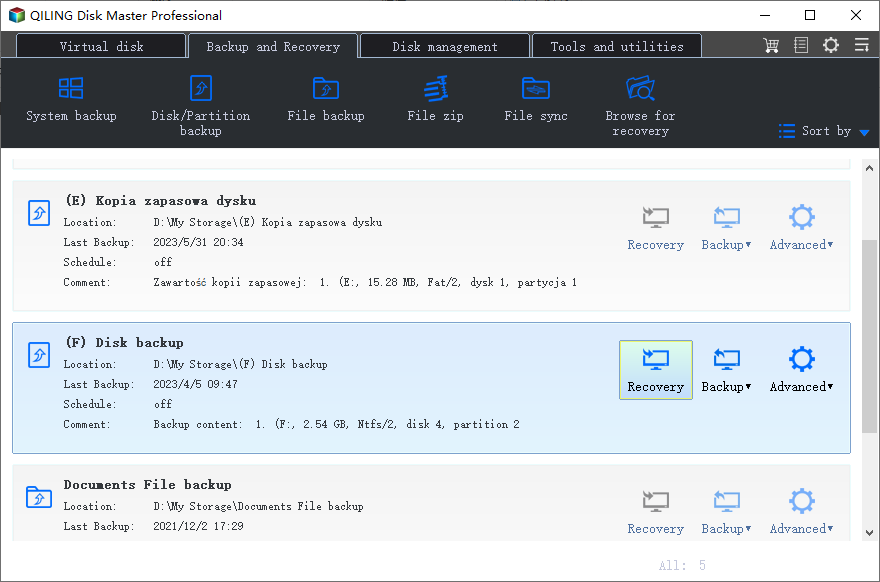
Step 1. When restoring, you have two options. You can restore the original destination, which is the current system location, or choose to restore to a different location, such as an external drive, SSD, or another hard drive. This second option allows you to restore to a separate disk, giving you more flexibility in your restoration process.
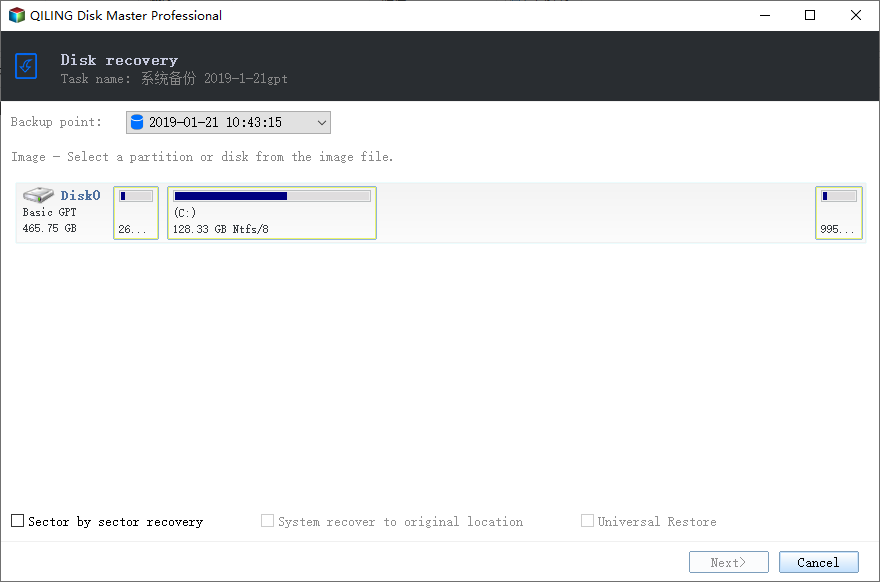
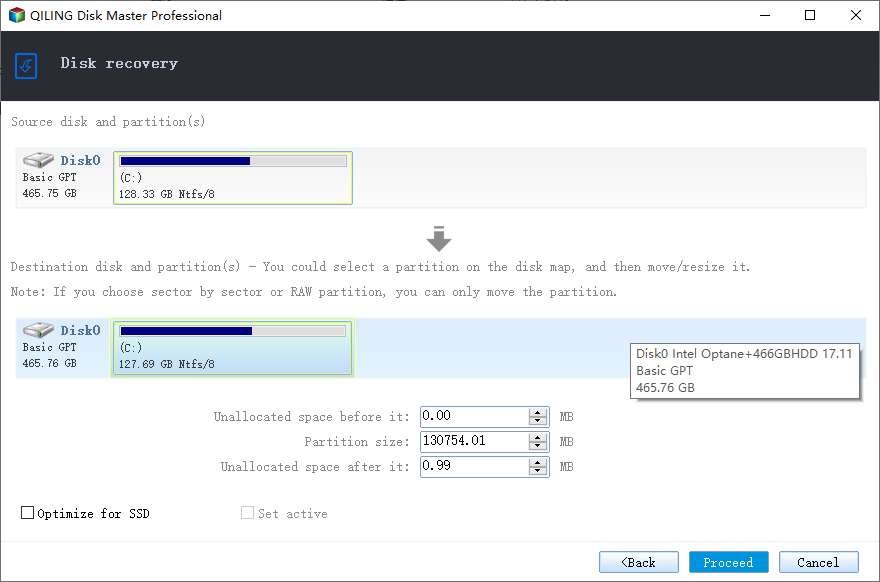
Step 2. The first option is to use the system image, which covers the original system and is a common choice. As demonstrated earlier, changing the C drive partition size is possible. In contrast, built-in recovery software on Lenovo, Dell, and other branded computers may not be able to restore the Onekey recovery function after partition size changes, but Qiling Disk Master can be used easily and quickly to achieve the same result.
Click "Proceed"
The computer is restarting to restore the system image, which means the restore process is almost complete. All you need to do is wait for it to finish.
Qiling Disk Master is a safe and fast tool for restoring the OneKey Recovery function after changing partition size, outperforming its counterparts in terms of performance and hardware environment compatibility. Whether you're using Windows 7, 8, 8.1, or 10, it's a great choice for protecting your system and managing your hard drive and partition.
Related Articles
- What is OneKey Recovery and Its Feature?
You will learn what is OneKey Recovery and how to create OneKey Rescue system easily. You can use Lenovo OneKey Recovery and Qiling Disk Master. - How to Use Lenovo One Key Recovery in Windows 7/8/10?
Lenovo One Key Recovery is a built-in system backup and restore tool preloaded on Lenovo computers. This step-by-step guide covers how to use it in Windows 7, 8, 10, and 11 for system backup and factory reset. - One-Key Recovery Software Lenovo OneKey Recovery in Windows 10
Lenovo OneKey Recovery is a backup and restore tool preloaded on Lenovo computers. Learn how to use Lenovo OneKey Recovery in Windows 10 and get the best alternative from this page. - Troubleshoot | Lenovo One Key Recovery Partition Has Damaged
I cannot access Lenovo OneKey Recovery after resizing my partition, saying "onekey recovery partition has damaged so do not launch the main application". Be relax and see this article. - How to Use Asus Recovery Key to Restore System When It Fails?
When system fails to boot up in Windows 10/8/7 Asus computer, users can easily restore it back to factory default settings from Asus recovery hidden partition making use of Asus system recovery key. Solution to Asus recovery key. - [2022 Guide] Dell Clone HDD to SSD Without Data Loss
Use this guide for Dell Clone HDD to SSD Without Data Loss, with cloning or migration steps, boot checks, and tips to keep data safe during the move.
Products
Articles & Tutorials
- Data Recovery
- Data Backup
- File Recovery
- File Backup
- File synchronize
- System Backup and Restore
- Disk and Partition Clone
- Technical articles
- Disk Master Help
- Windows Deleted File and Disk Recovery Tutorials
- Windows File and Data Recovery Tutorials
- More Windows Tutorials for Install, Security, Files, and PC Tips
- Windows Boot, Repair, and Recovery Environment Tutorials
- Windows Backup Tutorials
- Windows Restore Tutorials
- Windows Clone and Migration Tutorials
- Windows Server Backup, Recovery, and Management Tutorials
- Windows Disk, Partition, and Storage Management Tutorials