Solved: Samsung 850 EVO Not Detected on Windows 10
About Samsung 850 EVO SSD
The Samsung 850 EVO SSD is a popular choice among personal computer users, offering high performance at a lower price point than the 850 PRO. With various form factors, including 2.5-Inch, mSATA, and M.2, and capacities ranging from 120 GB to 4 TB, this drive is an ideal option for home users. Its sequential read and write speeds of up to 540 MB/s and 520 MB/s make it a great value for its price. Overall, the Samsung 850 EVO is a well-rounded drive that excels in performance, cost, and capacity.
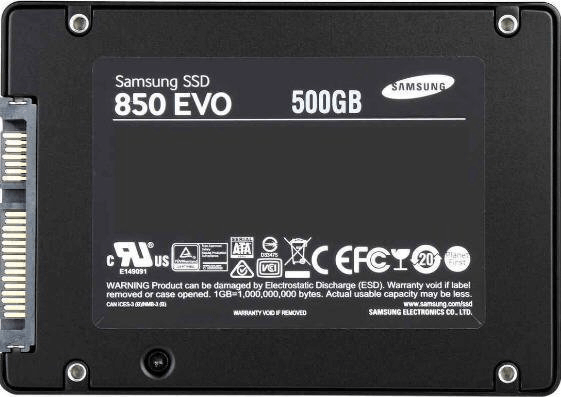
Many users have reported that the Samsung 850 EVO SSD is not detected in Windows 10, with the issue occurring during Windows installation, in the BIOS, in Windows Explorer, or when trying to replace a hard drive with the SSD. The causes of this problem are not yet fully understood, but it is likely related to various factors, including issues with the disk, the motherboard, or the operating system.
Situations and fixes: Samsung 850 EVO not detected on Windows 10
Samsung SSD cannot be detected on Windows when it has not been properly formatted or has a corrupted Master Boot Record (MBR), resulting in a "Samsung SSD 850 not found" error. To resolve this, you can reformat the disk to FAT32 or NTFS, or fix the MBR on Windows 10.
A Samsung 850 EVO SSD may not be detected on Windows 10 due to various reasons, including a disk that has not been initialized or formatted. In such cases, the drive can be initialized or formatted using the Windows device manager or a free partition tool, which can help resolve the issue. Five common situations that may lead to this problem include. (Note: I removed the last sentence as it was incomplete and didn't make sense in the context of the rewritten paragraph)
│Case 1: Samsung 850 EVO not detected in BIOS
This problem is important because the BIOS needs to recognize the Samsung 850 EVO for it to be used. To access the BIOS interface, you need to tap F2, F8, or Del keys immediately after powering on the computer. If the drive is not found, potential causes may include.
● The BIOS has been updated. It is currently running the latest version. There is no need to upgrade it.
● To resolve the issue, try disconnecting the Samsung SSD from your computer and then reconnect it. This should allow the device to reconnect and function correctly. If the issue persists, you may want to check the device's power management settings or consult the user manual for further assistance.
● You may want to try using a different SATA port on your computer to see if it resolves the issue with your Samsung 850 EVO SSD.
│Case 2: Samsung 850 EVO not detected when installing Windows 10
Users who encounter an issue where the Samsung 850 EVO drive doesn't appear during the Windows installation process, which culminates in an error code 0Xc000021A, may need to update their UEFI firmware to resolve the issue.
If you're unable to find the Samsung SSD on the list, try connecting it to a different computer. Open Windows Disk Management, right-click the SSD, and select "New Simple Volume" to create a new partition. Then, attempt the installation again, and you should be able to select the correct drive when prompted to install Windows.
If you encounter the message "We couldn't create a new partition or locate an existing one…" during Windows 10 installation, you can try cloning the old hard drive to the Samsung 850 EVO SSD using a SATA-to-USB adapter and Samsung Magician software, which will help you install the SSD properly.
If you're having trouble installing Windows 10, please visit the link about Windows not being able to install on an SSD.
│Case 3: Samsung 850 EVO not detected by Samsung Magician
If your SSD is detected by Windows but not by Magician, you can try updating the Magician software to the latest version, checking for any BIOS updates for your motherboard, and ensuring that the SSD is properly connected to the motherboard. Additionally, you can try running a disk check in Windows to see if there are any issues with the SSD.
- If the SSD is not detected as an IDE or AHCI device, you can install the standard AHCI controller driver for Windows 10 to resolve the issue.
- If your Samsung 850 EVO is connected to a RAID/SCSI storage device controller, Samsung Magician may not detect it properly. In this case, you can try installing the Microsoft default driver, which is automatically installed with a Microsoft operating system installation.
Some users tried to replace their second storage drive with Samsung SSD 850 EVO using Samsung Magician, but it couldn't detect the 850 EVO SSD. Instead, they could try using another disk cloning software like Qiling Disk Master Standard, which is a free and excellent disk partition manager.
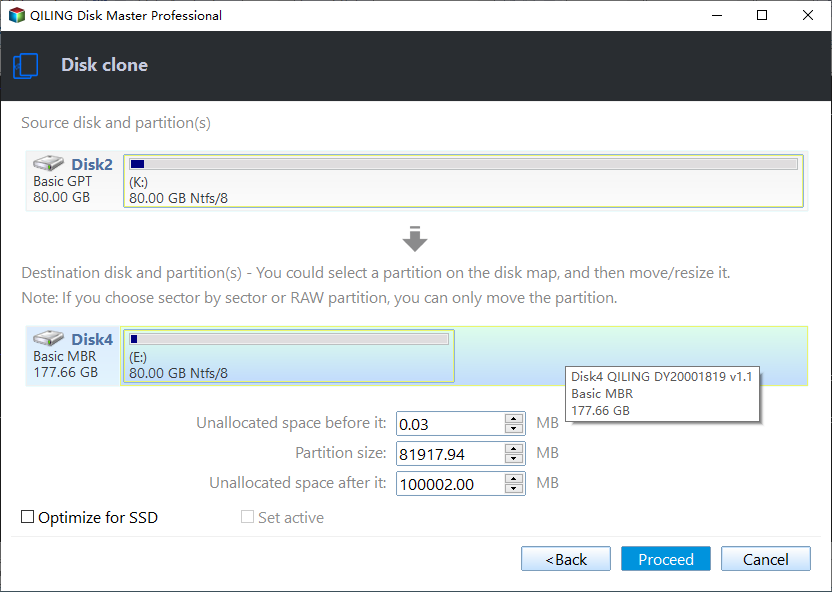
Using this freeware is as simple as ABC. First, connect the Samsung 850 EVO SSD to your Windows 10 system. Next, open Qiling Disk Master Standard and select the source hard drive you want to clone from.
│Case 4: Samsung SSD 850 EVO M.2 not detected
The 850 EVO has three Form Factors, including M.2, which has a slightly different setup in BIOS compared to the other versions. If you're unable to get your computer to detect the M.2 SSD after installing Windows 10, you can try making a change in the BIOS settings to resolve the issue.
1. Press F5 to open Default settings.
2. Press F7 to open Advanced settings.
3. To change the SATA Mode Configuration to M.2, go to the Advanced tab, select Onboard Device Configuration, and then change the SATA Mode Configuration to M.2.
│Case 5: Samsung 850 EVO not showing up in “This PC”
In some cases, a Samsung SSD may not be detected in Windows 10, particularly when it cannot be shown in Windows File Explorer under "This PC". This issue can often be resolved by ensuring the SSD is detected by Windows Device Manager, BIOS, or Samsung Magician.
● Change drive letter. Give partition on 850 EVO another drive letter, for example, from E to F.
● Format the SSD using Disk Management by right-clicking on the partition and selecting Format. Alternatively, you can use a tool to quick format the SSD or securely erase it.
● If you're experiencing a "write protected" error when trying to format your 850 EVO, you can resolve the issue by following these steps in Command Prompt: list volume, select the volume number, and then execute the attributes volume command twice to clear the readonly attribute. This should allow you to format the drive without any issues.
● If the Samsung 850 SSD appears as a DVD-ROM type in the Command Prompt, which can't be modified, try this method to change it back to normal. First, convert it to a dynamic disk in Disk Management, then run Diskpart to clean the disk. Make sure to select the correct disk number (#) for the Samsung 850 EVO. After that, go back to Disk Management to initialize it. This should resolve the issue of the Samsung EVO 850 not being recognized in Windows 10.
Summary
The situations and solutions mentioned above also apply to Samsung 850 EVO not detected in Windows 7 and 8, and Samsung SSD 850 PRO not recognized in Windows 10 and 11. The partition manager Qiling Disk Master, which is an all-around and reliable utility, can also be used for Samsung SSD. For example, you can use it to resize, clone, and format Samsung SSD, among other functions. You can also move OS to a new Samsung SSD without reinstalling Windows by using Qiling Disk Master Professional.
Related Articles
- How to Upgrade Xbox One X to SSD - Guide with Pictures
Learn how to Upgrade Xbox One X to SSD - Guide with Pictures with clear steps, key checks, and practical tips. - How to Apply Windows 10 Boot Repair [6 Promoted Ways]🔥
This article will cover six valuable methods to help users fix Windows 10 startup errors. Read on and learn how to apply Windows 10 boot repair efficiently. - Windows Boot Manager Not Showing in BIOS | Fixed
Discover how to fix the issue of Windows Boot Manager not showing in BIOS. Our step-by-step guide will help you resolve this problem and get your computer back up and running smoothly. - Top 9 Best Hard Drive Format Software Free Download 🏆
This guide explains Top 9 Best Hard Drive Format Software Free Download 🏆 with clear steps, key checks, and practical tips. - Tutorial: How to Resize External Hard Drive on Windows 10/11
This guide explains Tutorial: How to Resize External Hard Drive on Windows 10/11 with clear steps, key checks, and practical tips. - Can I Run Windows Disk Speed Test with Command Line? Sure, Your Guide Is Here
The speed of your drive is crucial for a faster and smoother experience, as it gets data to the processor quickly. To assess this, two reliable approaches for a Windows disk speed test command line are available.
Products
Articles & Tutorials
- Data Recovery
- Data Backup
- File Recovery
- File Backup
- File synchronize
- System Backup and Restore
- Disk and Partition Clone
- Technical articles
- Disk Master Help
- Windows Deleted File and Disk Recovery Tutorials
- Windows File and Data Recovery Tutorials
- More Windows Tutorials for Install, Security, Files, and PC Tips
- Windows Boot, Repair, and Recovery Environment Tutorials
- Windows Backup Tutorials
- Windows Restore Tutorials
- Windows Clone and Migration Tutorials
- Windows Server Backup, Recovery, and Management Tutorials
- Windows Disk, Partition, and Storage Management Tutorials