The Best Way to Set Up SSD for OS Only
Advantages of using SSD for OS only
A Solid State Drive (SSD) is a faster alternative to a Hard Disk Drive (HDD), and setting up an SSD for your operating system can significantly boost load speeds. Although SSDs are more expensive than HDDs, you can opt for a smaller, more affordable one, such as a 64 GB SSD, to use solely for your OS. If budget allows, consider a separate SSD for games or other resource-intensive programs that require high-speed reading and writing.
How to set up SSD for OS only
If you're building a computer with an SSD for the first time, you can install Windows directly onto the SSD. However, if you've previously installed the operating system on a hard disk drive (HDD) and want to transfer it to the SSD without reinstalling, you can use a cloning software to create an exact copy of your HDD's contents onto the SSD. This way, you can optimize your computer's performance without having to reinstall the operating system.
One way to migrate to a new SSD is to use a complex command line or backup and then restore, but a simpler and more efficient way is to use Qiling Disk Master Professional's "Migrate OS to SSD" feature, which can help you achieve this task with ease.
This tool employs the hot clone technique to help you migrate OS to the target disk without rebooting your device.
✍ Try the demo version of Qiling Disk Master Professional before purchasing it.
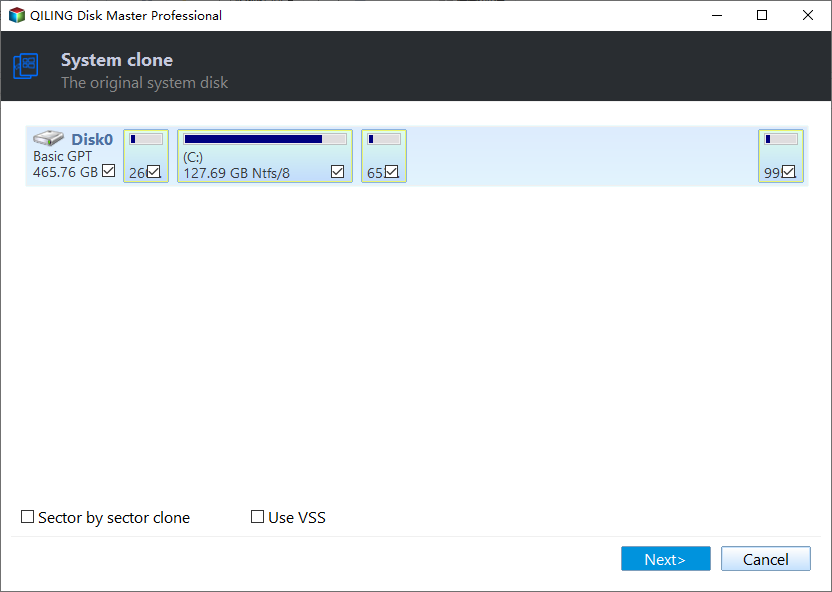
Step 1. First, plug your SSD into your computer. Then, install and open Qiling Disk Master Professional. Next, click on the "Tools and utilities" tab and choose "Migrate OS". Finally, click "Next" in the pop-up window.
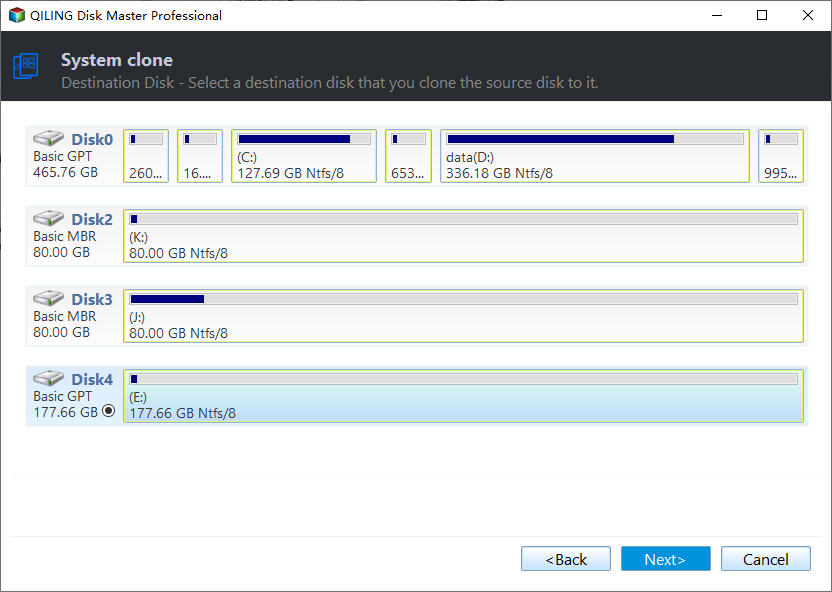
Step 2. In this step, select an unallocated disk (SSD) and click "Next" to continue.
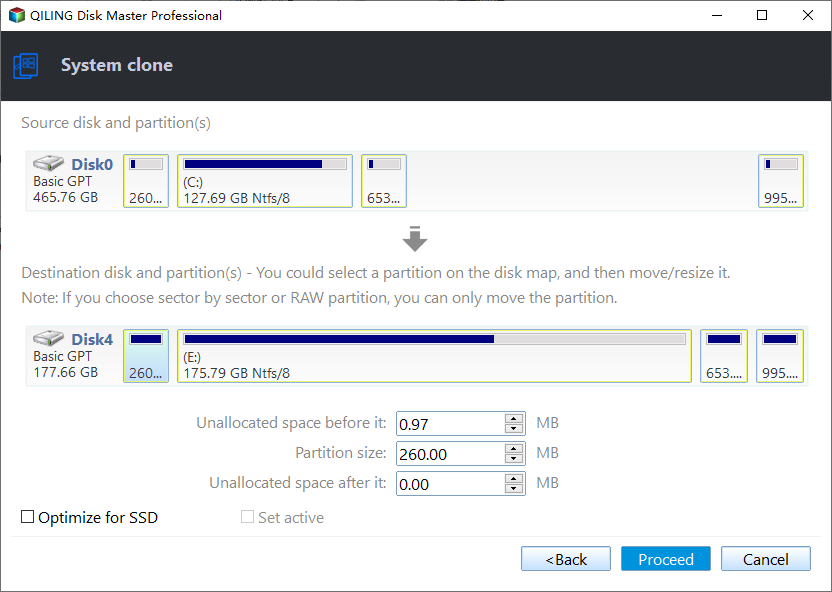
Step 3. You can resize the partition and change the drive letter as desired, either by typing a value or directly dragging to adjust.
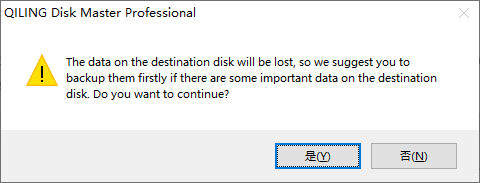
Step 4. After everything has been done, go back to the main screen, and click "Proceed" to commit the changes.
Conclusion
With the help of Qiling Disk Master, setting up an SSD for an OS is simplified, and it's essential to periodically free up SSD disk space to maintain system health. Additionally, the software allows for various partition optimization operations, including moving, deleting, splitting, and extending partitions.
With the rise of Windows 10, users can now create a portable version of the operating system on a USB drive using Qiling Disk Master, effectively turning it into a "Windows to Go Creator".
Related Articles
- How to Format External Hard Drive to FAT32 on Windows 10? [FAT32 Guide]
Learn how to Format External Hard Drive to FAT32 on Windows 10 with clear steps, key checks, and practical tips. - How to Format Hard Drive from BIOS Windows 10
This guide will provide three complete guides to formatting the hard drives from BIOS Windows 10, including format via Qiling Disk Master, Command Prompt, and formatting the drive during Windows installation. - How to Format Raw Micro SD Card [Quick Guide]
This article provides quick and efficient ways to format raw Micro SD card and introduce a professional third-party tool to manage your Micro SD card - How to Format SD Card for Dash Cam on Windows/Mac/Dash Cam? [2024 Lasted Ways]
Learn how to Format SD Card for Dash Cam on Windows/Mac/Dash Cam with clear steps, key checks, and practical tips. - What Is the Easiest Way to Shred Files in Windows 10?
This guide explains What Is the Easiest Way to Shred Files in Windows 10 with clear steps, key checks, and practical tips. - Solved: SSD Not Showing Up in Disk Management on Windows 10/11/8/7
This guide explains Solved: SSD Not Showing Up in Disk Management on Windows 10/11/8/7 with clear steps, key checks, and practical tips.
Products
Articles & Tutorials
- Data Recovery
- Data Backup
- File Recovery
- File Backup
- File synchronize
- System Backup and Restore
- Disk and Partition Clone
- Technical articles
- Disk Master Help
- Windows Deleted File and Disk Recovery Tutorials
- Windows File and Data Recovery Tutorials
- More Windows Tutorials for Install, Security, Files, and PC Tips
- Windows Boot, Repair, and Recovery Environment Tutorials
- Windows Backup Tutorials
- Windows Restore Tutorials
- Windows Clone and Migration Tutorials
- Windows Server Backup, Recovery, and Management Tutorials
- Windows Disk, Partition, and Storage Management Tutorials