Fix INVALID_DATA_ACCESS_TRAP in Windows 11 Step by Step
INVALID_DATA_ACCESS_TRAP is a Windows stop error, not a diagnosis of one particular broken component. It can appear during an upgrade, after a driver change, or while an application is running. The useful starting point is what changed immediately before the first crash.
Do not uninstall every media application or disable antivirus protection simply because an old troubleshooting list suggests it. Work through the likely cause first and make one change at a time so you can tell what helped.
Record the crash and get into Windows safely
Photograph the stop code and any driver filename shown on the blue screen. Note whether the failure occurs during startup, during a feature update, or only with one device or application. Disconnect nonessential USB accessories and try a normal restart.
If Windows repeatedly fails to start, use its recovery environment or compatible installation media and select the repair option. Open Troubleshoot > Advanced options > Startup Settings > Restart, then choose Safe Mode. You may need the BitLocker recovery key. Do not repeatedly force power off while a firmware update or disk operation is running.
If a drive clicks, disappears, or reports frequent read errors, prioritize recovering files and checking hardware. Long repair scans can place additional load on an already failing disk.
Back up accessible files before repair
Use this workflow when Windows can run stably enough to complete a backup. If it cannot, use a compatible recovery environment or professional assistance instead of expecting an ordinary installed program to run before Windows starts.
Step 1. Connect a separate backup disk and open File Backup in Qiling Disk Master.
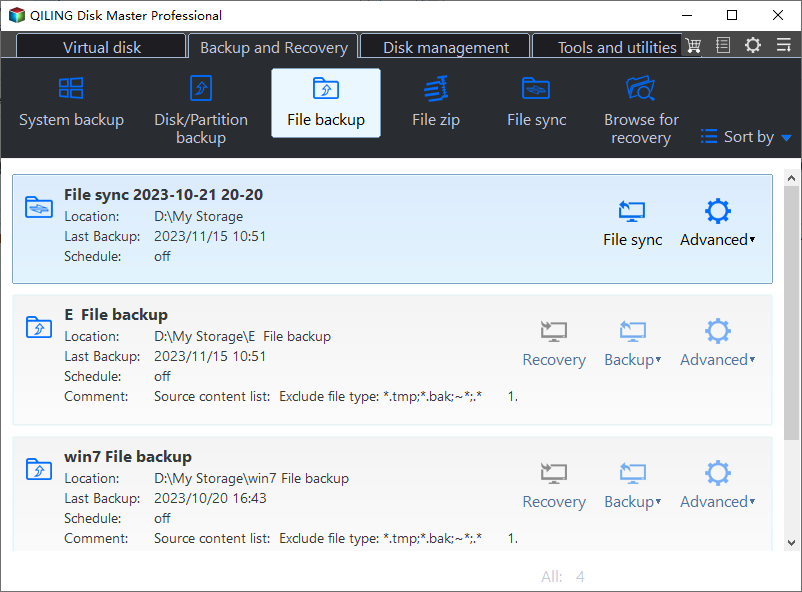
Step 2. Expand the folder tree and select important documents, work folders, and exported application data. Close applications that are actively changing those files.
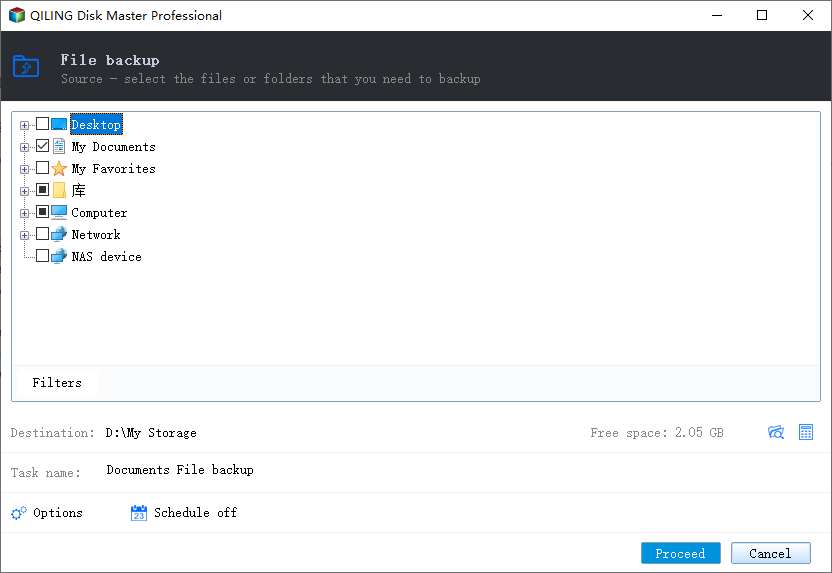
Step 3. Choose the external disk as the destination and click Proceed. Wait for completion and check that the backup is available for restoration. Disconnect it before reinstalling Windows or modifying partitions.
Undo the most relevant software or driver change
Step 1. Search for View reliability history. Find the first failure and compare its date with driver, application, or Windows installations. An event next to the crash is a clue, not proof that it caused the problem.
Step 2. If a specific application triggers the crash, install a compatible update from its publisher. If the problem began immediately after an application update, use its supported rollback or reinstall process after preserving its data.
Step 3. For a recent device-driver change, open Device Manager, locate the device, and open Properties > Driver. Use Roll Back Driver if available. Otherwise obtain the correct driver for the exact computer or device model from its manufacturer.
Step 4. Restart and repeat the activity that previously failed. Avoid changing multiple unrelated drivers at once, and do not use an unknown automatic driver-download service.
Check Windows files and memory
When the system is stable and storage appears healthy, open Terminal as administrator. Run these commands separately, allowing each to finish:
DISM /Online /Cleanup-Image /RestoreHealth
sfc /scannow
The online commands target the Windows installation currently running. They are not a ready-made offline repair command for a recovery prompt. Record any error instead of repeatedly running the same command without addressing its cause.
For apparently random crashes across several applications, save work, run mdsched.exe, and choose when to restart for Windows Memory Diagnostic. A reported error warrants further hardware testing. A passing quick test does not rule out all intermittent memory faults. Remove unsupported overclocking settings using the manufacturer's documented procedure.
If the crash happens during an upgrade
Check the target release's hardware and application requirements, available system-disk space, and the PC manufacturer's firmware guidance. Remove unnecessary peripherals and update only relevant incompatible components. Keep Windows security protection enabled unless a vendor provides a specific, temporary diagnostic procedure.
If the installed system still starts, an authorized matching-language Windows installer may offer an in-place repair that keeps files and applications. Confirm the retention summary before accepting. If no repair path works, restore a known-good image or reinstall only after verifying the backup. Repeated crashes immediately after a clean installation are a reason to investigate hardware, not to repeat the installation indefinitely.
Related Articles
- Windows 11 Update Blue Screen
Compare update-related crashes with hardware and driver problems before choosing recovery. - Windows 11 Rollback Options
Understand rollback limits and the difference between restoring an image and reinstalling Windows.
Products
Articles & Tutorials
- Data Recovery
- Data Backup
- File Recovery
- File Backup
- File synchronize
- System Backup and Restore
- Disk and Partition Clone
- Technical articles
- Disk Master Help
- Windows Deleted File and Disk Recovery Tutorials
- Windows File and Data Recovery Tutorials
- More Windows Tutorials for Install, Security, Files, and PC Tips
- Windows Boot, Repair, and Recovery Environment Tutorials
- Windows Backup Tutorials
- Windows Restore Tutorials
- Windows Clone and Migration Tutorials
- Windows Server Backup, Recovery, and Management Tutorials
- Windows Disk, Partition, and Storage Management Tutorials