How to Use Windows File Recovery
Windows File Recovery is Microsoft command-line recovery software for deleted files. It can help, but the syntax, source drive, and destination drive must be correct.
Understand the problem
Recovered files should be saved to a different drive. Running recovery on the same partition that lost files can overwrite data.
- Confirm the disk, partition, file system, Windows version, boot mode, or update state before making changes.
- Back up or recover important files before conversion, deletion, formatting, cleanup, reimage, or boot repair.
- For boot-related work, check BIOS or UEFI mode, boot order, system partition status, and recovery media first.
Use Windows built-in tools
Prepare the command carefully.
- Install Windows File Recovery from Microsoft Store.
- Choose the source drive where files were lost.
- Choose a different destination drive for recovered files.
- Select regular, extensive, or segment-style recovery based on file system and loss scenario.
- Use filters for file names, extensions, or folders when possible.
Use Qiling tools for guided steps
 Deep Data Recovery
Use a visual recovery workflow when command-line recovery is difficult or the destination path fails.
Function. Recover files with Fast Scan
Step 1. Stop writing new data to the drive that lost files. If possible, install Deep Data Recovery on another drive.
Step 2. Launch Deep Data Recovery and choose Fast Scan first. Fast Scan is a practical first pass before deeper recovery.
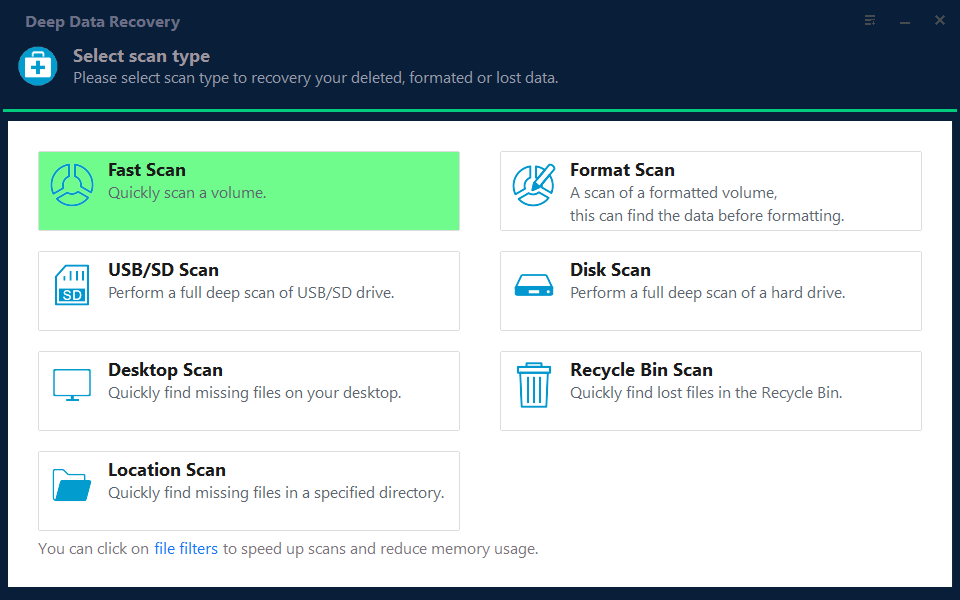
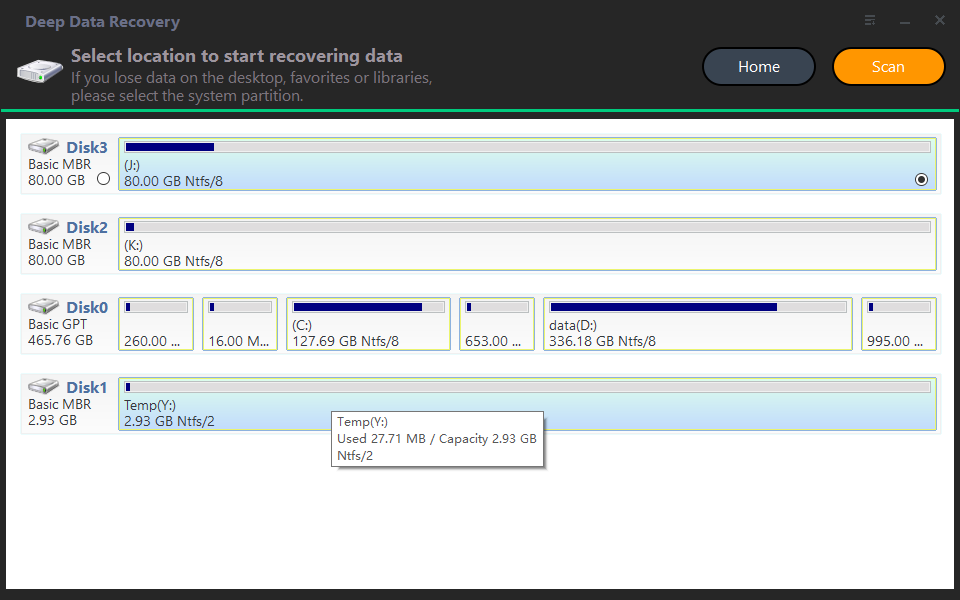
Step 3. Select the drive that lost files as the scan location. If the exact folder is missing, scan the whole partition.
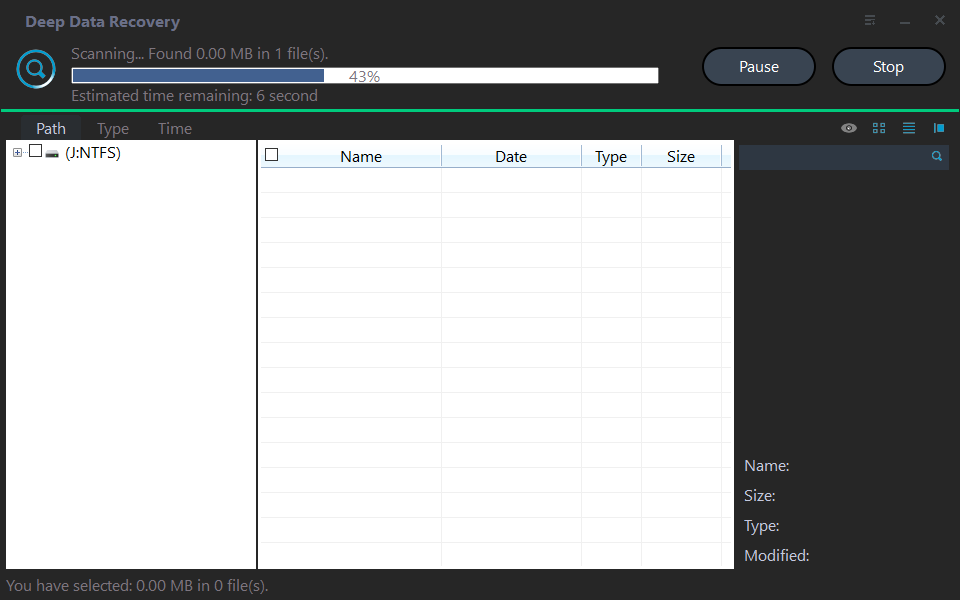
Step 4. Wait for the scan to complete. Use file type, name, path, and date filters to narrow the results.
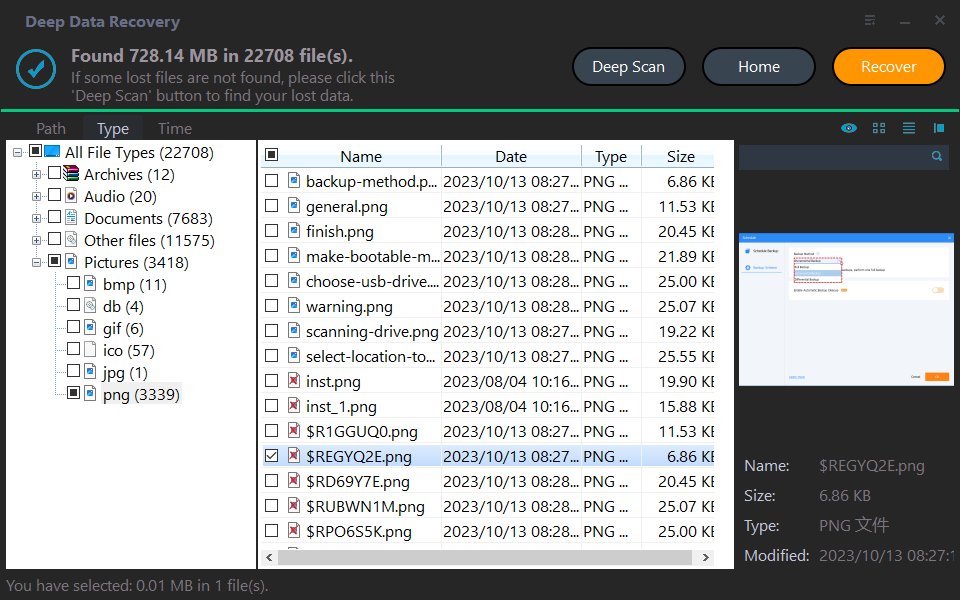
Step 5. Preview files, select the items you need, and recover them to another disk or external drive.
Check the result
Open recovered files from the destination drive and verify their content. If important files are missing, try a deeper scan before using the source drive.
Related Articles
-
Windows File Recovery Destination Error
Fix destination folder errors when Windows File Recovery cannot save files. -
Windows File Recovery Command Error
Correct Windows File Recovery command syntax and path issues.
Products
Articles & Tutorials
- Data Recovery
- Data Backup
- File Recovery
- File Backup
- File synchronize
- System Backup and Restore
- Disk and Partition Clone
- Technical articles
- Disk Master Help
- Windows Deleted File and Disk Recovery Tutorials
- Windows File and Data Recovery Tutorials
- More Windows Tutorials for Install, Security, Files, and PC Tips
- Windows Boot, Repair, and Recovery Environment Tutorials
- Windows Backup Tutorials
- Windows Restore Tutorials
- Windows Clone and Migration Tutorials
- Windows Server Backup, Recovery, and Management Tutorials
- Windows Disk, Partition, and Storage Management Tutorials