Fix Errors While Creating a New Partition in Windows
Creating a new partition can fail when the disk layout, partition style, or boot mode does not match the operation.
Background and causes
Common causes include no real unallocated space, four primary partitions on MBR, read-only disk status, or Windows Setup using the wrong boot mode.
- Confirm the exact disk, partition, drive letter, file system, and capacity before changing anything.
- Recover or back up important files before formatting, deleting, converting, or recreating partitions.
- For boot-related changes, check BIOS/UEFI mode and boot order before editing disk layout.
Use Windows built-in tools
Check Disk Management for unallocated space. In Windows Setup, disconnect extra drives and confirm UEFI/GPT or Legacy/MBR mode is consistent.
Use Qiling tools for guided steps
 Qiling Disk Master
Create a new partition from unallocated space or shrink an existing partition first.
Function 1. Create a partition from unallocated space
Use this function when the disk already has unallocated space. If there is no unallocated space, use Function 2 first.
Step 1. Open Qiling Disk Master and locate the unallocated space on the target disk. Select the unallocated space, then click Create.
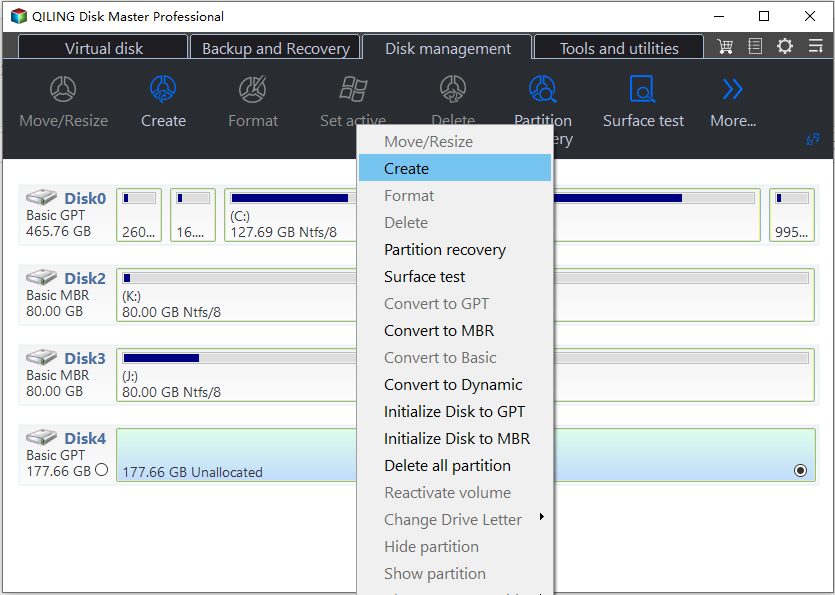
Step 2. Set the file system, volume label, cluster size, partition size, and location. Confirm that the new partition will be created on the correct disk.
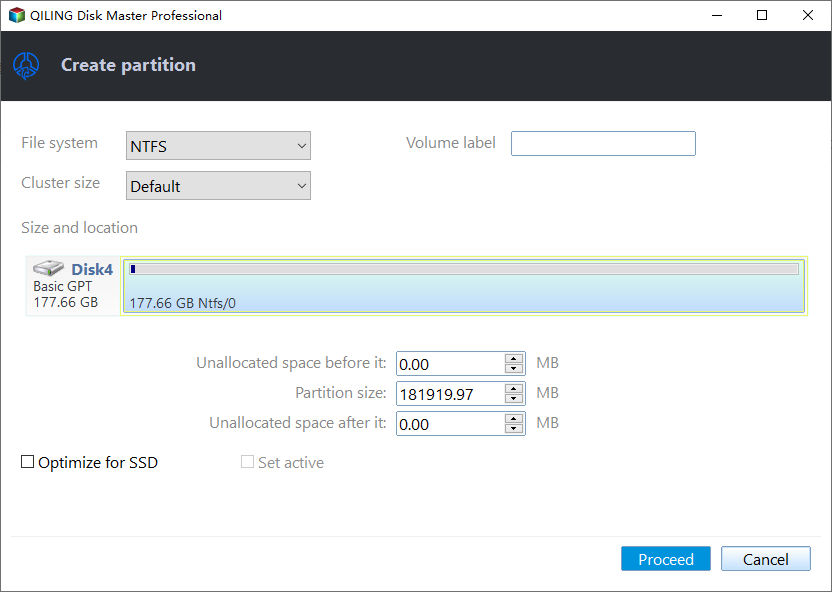
Step 3. Review the pending operation, then click Proceed to create and format the new partition.
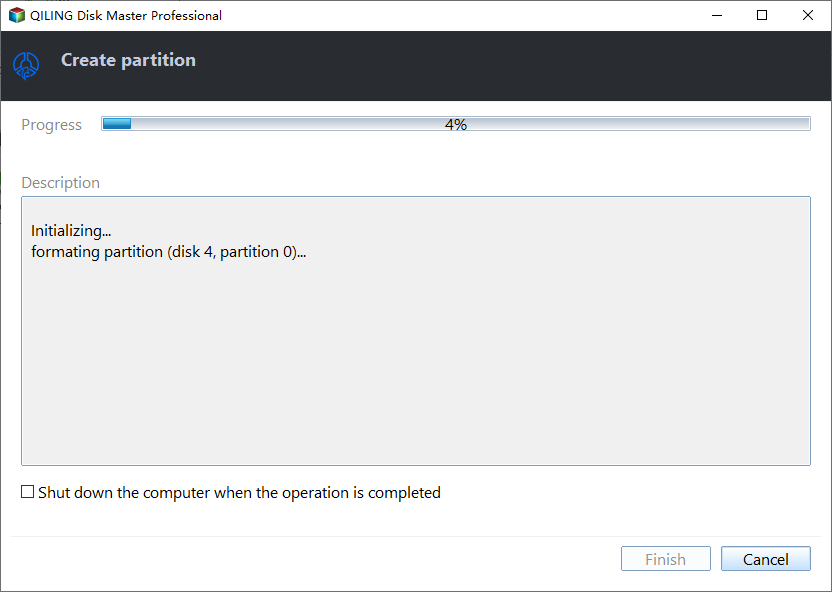
Function 2. Shrink an existing partition to create unallocated space
Use this function when the target disk has free space inside an existing partition but no unallocated space for creating a new partition.
Step 1. Select the partition that has enough free space, then click the Resize/Move button.
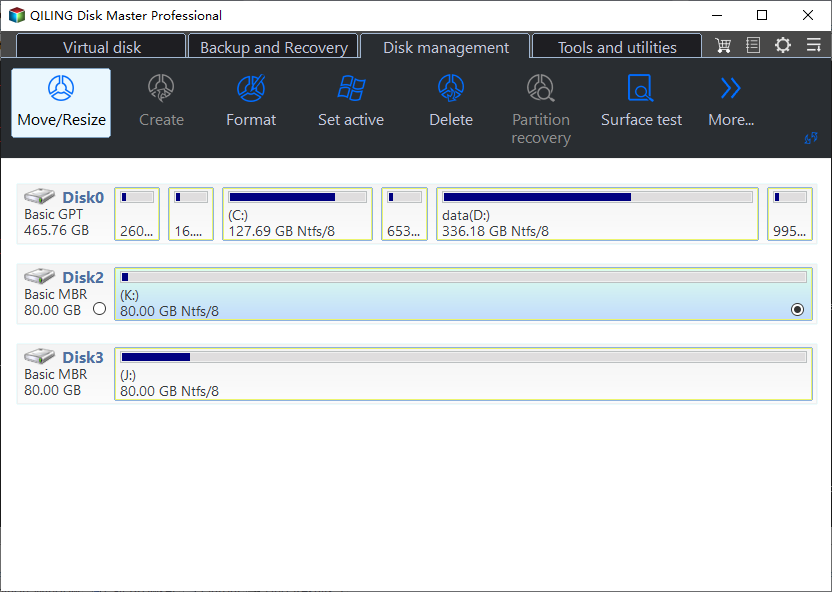
Step 2. Drag one border of the partition inward, or enter a smaller partition size manually, to create unallocated space.
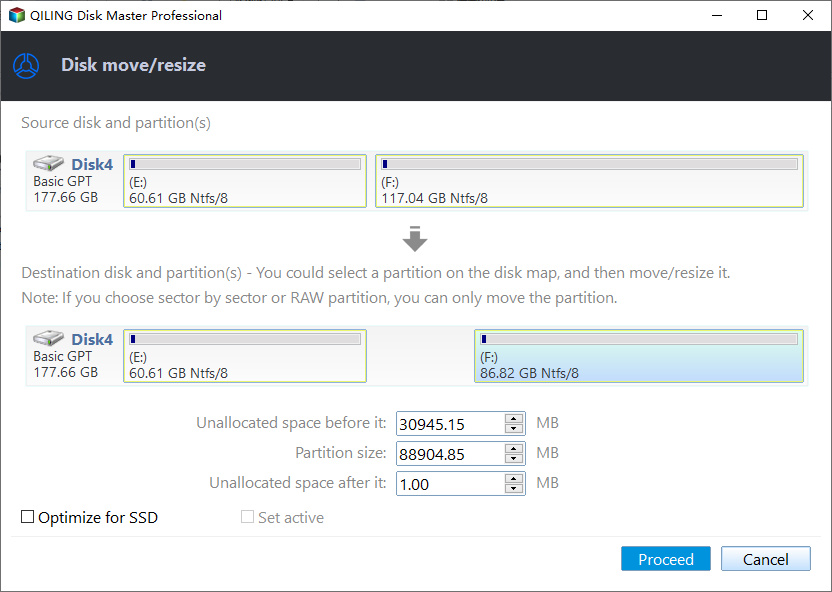
Step 3. Review the pending resize operation. If the target drive letter and new size are correct, click Proceed. After the unallocated space appears, return to Function 1 to create the new partition.
Check the result
Create the partition, assign a drive letter, format it, and verify it appears in File Explorer.
Related Articles
-
How to Partition a Dell Hard Drive
Create, resize, and protect disk partitions without touching recovery partitions. -
We Could not Create a New Partition
Fix Windows Setup partition errors with boot-mode and disk-layout checks.
Products
Articles & Tutorials
- Data Recovery
- Data Backup
- File Recovery
- File Backup
- File synchronize
- System Backup and Restore
- Disk and Partition Clone
- Technical articles
- Disk Master Help
- Windows Deleted File and Disk Recovery Tutorials
- Windows File and Data Recovery Tutorials
- More Windows Tutorials for Install, Security, Files, and PC Tips
- Windows Boot, Repair, and Recovery Environment Tutorials
- Windows Backup Tutorials
- Windows Restore Tutorials
- Windows Clone and Migration Tutorials
- Windows Server Backup, Recovery, and Management Tutorials
- Windows Disk, Partition, and Storage Management Tutorials