Windows 10 Has No exFAT Option: Check the Volume and Format Safely
Windows 10 supports exFAT, but the available format options depend on the selected volume and the tool being used. A missing exFAT option does not mean you need to convert the disk from GPT to MBR.
exFAT is useful for removable storage shared with compatible devices. It is not a replacement for the NTFS Windows system volume, and the device that will read the disk must also support it.
Check the selected volume and the intended device
- Open This PC and identify the external drive by label and capacity. Do not select C: or a system/recovery partition.
- Check that the files open. If Windows reports RAW or asks to format unexpectedly, recover important data before proceeding.
- Confirm the destination device supports exFAT. Older cameras, consoles, and appliances may require a different file system or partition layout.
- Open Disk Management to see whether the device already has an ordinary usable volume. Unallocated space has no existing volume to format through File Explorer.
A disk's GPT or MBR style and a volume's NTFS, FAT32, or exFAT format are different settings. Partition alignment is not a general fix for a missing file-system option.
Back up all files before changing the format
Formatting removes the existing file-system contents. Qiling Disk Master file backup can protect a readable USB or external volume before this deliberate change.
Step 1. Connect a separate backup disk and open File backup.
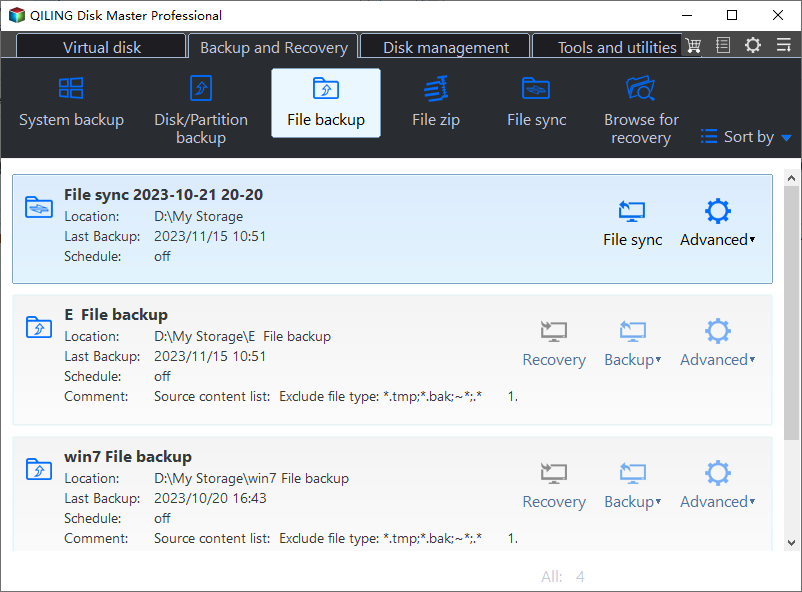
Step 2. Expand the removable drive in the tree control and select the required folders. Include hidden personal folders if they contain data you need.
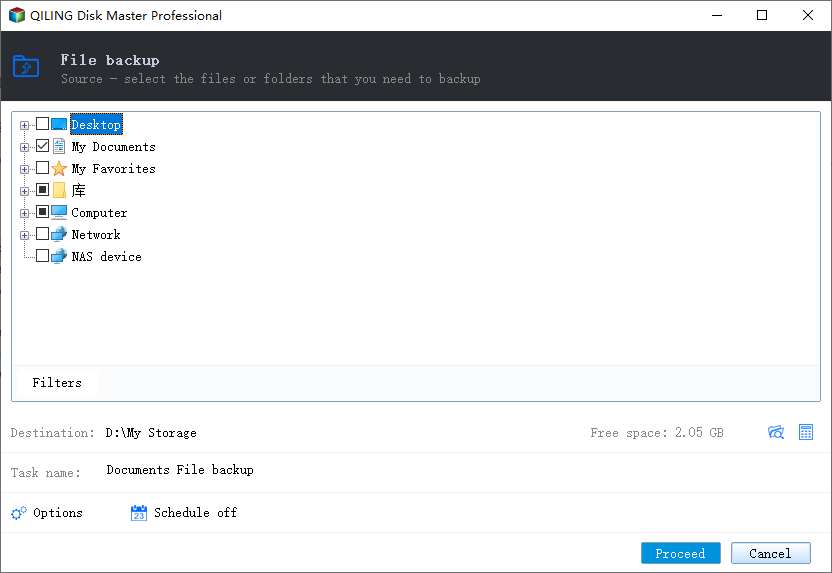
Step 3. Choose the separate disk as destination, review both paths, and click Proceed. Restore sample files elsewhere and open them before formatting the original volume.
Use File Explorer or the format command
File Explorer
- Right-click the confirmed data volume in This PC and select Format.
- If exFAT is offered, select it. Keep the default allocation unit size unless the target device requires another value.
- Enter a recognizable label. Check the capacity and drive letter once more.
- Start the format only after verifying the backup, then acknowledge the data-loss warning.
Command Prompt
If the GUI does not offer the needed option for a supported data volume, open an administrator Command Prompt. For a confirmed disposable E: volume, the command is:
format E: /FS:exFAT /Q /V:TRANSFERReplace E: with the actual destination letter. This command is destructive, not an in-place file-system conversion. If prompted for the current label, read it from the intended drive's properties. A quick format is appropriate only after data protection and does not test every sector.
The supported file-system switch is documented in Microsoft's format command reference. Do not use convert E: /fs:exfat; Windows Convert is not an NTFS-to-exFAT converter.
Handle missing volumes and test compatibility
For a genuinely blank new disk, create an ordinary data volume in Disk Management and assign a drive letter, then format the volume. If an old disk unexpectedly became unallocated, stop and recover data instead of treating it as blank.
If formatting reports write protection, I/O errors, or disconnects, investigate the device rather than adding stronger erase commands. No formatting option can repair failed flash memory or a faulty cable.
After formatting, verify exFAT in drive properties, copy back a few files, safely eject, and test them on the actual target device. Restore the remaining data only after that compatibility check succeeds.
Related Articles
- Change exFAT to NTFS
Choose a Windows-focused format when the drive no longer needs cross-device use. - Use exFAT in Windows 10
Review exFAT preparation and compatibility before formatting.
Products
Articles & Tutorials
- Data Recovery
- Data Backup
- File Recovery
- File Backup
- File synchronize
- System Backup and Restore
- Disk and Partition Clone
- Technical articles
- Disk Master Help
- Windows Deleted File and Disk Recovery Tutorials
- Windows File and Data Recovery Tutorials
- More Windows Tutorials for Install, Security, Files, and PC Tips
- Windows Boot, Repair, and Recovery Environment Tutorials
- Windows Backup Tutorials
- Windows Restore Tutorials
- Windows Clone and Migration Tutorials
- Windows Server Backup, Recovery, and Management Tutorials
- Windows Disk, Partition, and Storage Management Tutorials