Convert exFAT to NTFS in Windows 10
exFAT is useful for removable storage shared across devices, while NTFS is better for Windows permissions, compression, large local drives, and some backup tasks.
Understand the problem
Windows does not provide a direct non-destructive exFAT-to-NTFS conversion command. The practical method is to back up files, format to NTFS, and copy files back.
- Confirm the exact disk, partition, file system, Windows version, boot mode, or sync setting before making changes.
- Back up or recover important files before wiping, formatting, converting, cloning, reinstalling, or repairing Windows.
- For boot and update tasks, prepare recovery media and check BIOS or UEFI settings before deeper repair.
Use Windows built-in tools
Use File Explorer or Disk Management after backup.
- Copy all files from the exFAT drive to another location.
- Right-click the drive and choose Format.
- Select NTFS and give the volume a clear label.
- Start formatting and wait until it finishes.
- Copy files back and test access.
Use Qiling tools for guided steps
 Qiling Disk Master
Back up and format an exFAT drive to NTFS with clear source and destination checks.
Function. Back up important files first
Step 1. Connect an external drive or choose a safe network location with enough free space for files on the exFAT drive.
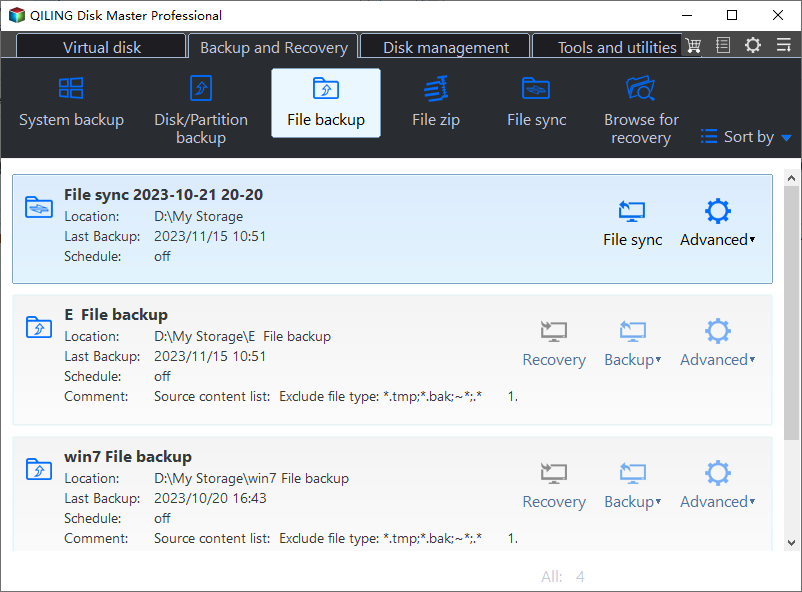
Step 2. Open Qiling Disk Master and choose File Backup. This protects files before cleanup, partition changes, repair, or system updates.
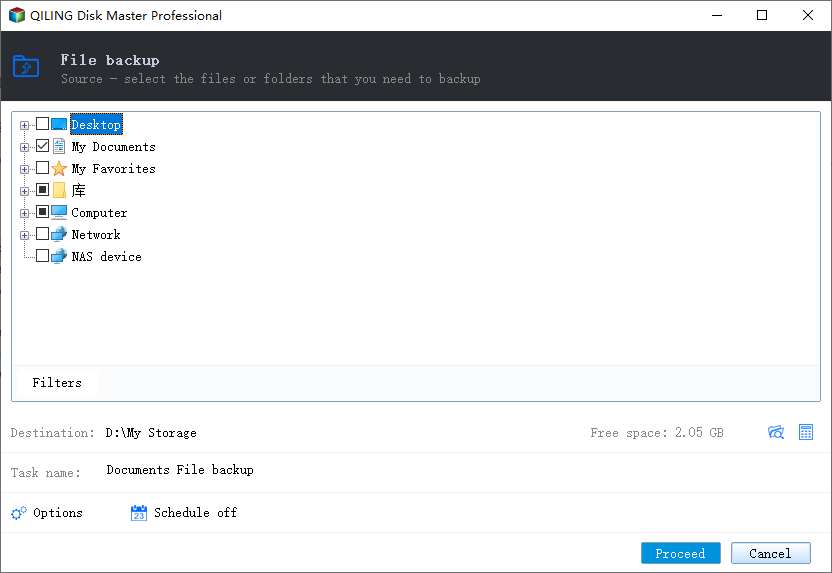
Step 3. In the tree control, select the files and folders that must be protected. Back up the full drive before formatting because conversion requires rewriting the file system
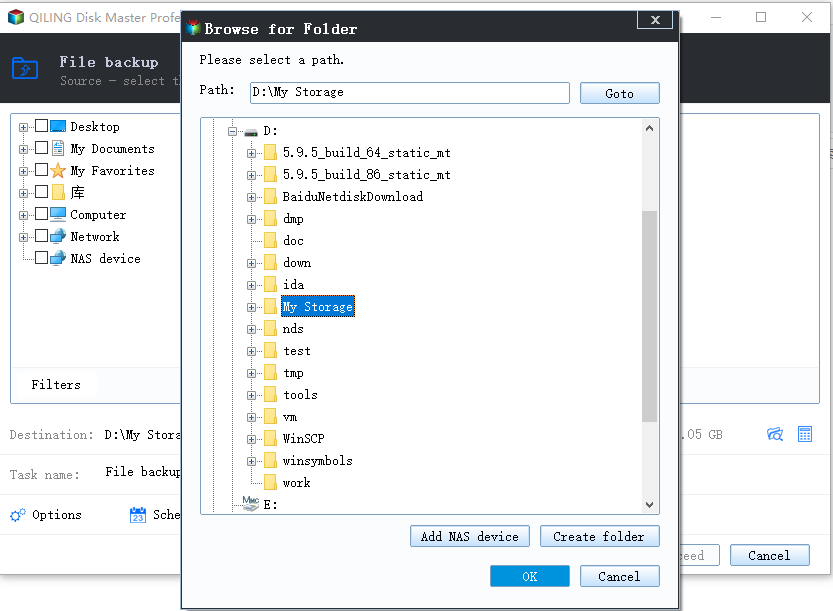
Step 4. Choose a destination that is not affected by the operation, such as another disk, external drive, NAS, or shared folder.
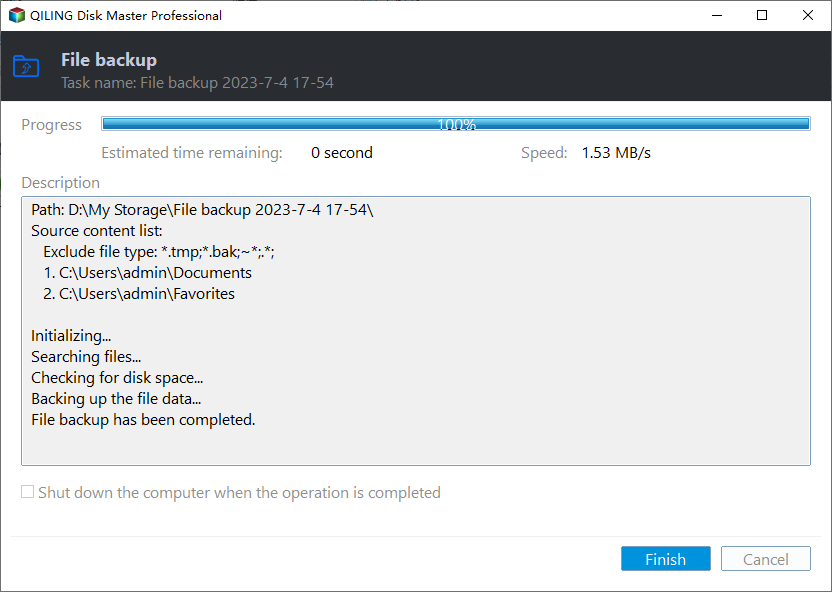
Step 5. Review the source and destination, then click Proceed. Wait for the backup to finish before continuing.
Function. Format the selected partition after backup
Step 1. Confirm the exFAT drive is the correct target and recover or back up needed files first.
Step 2. In Qiling Disk Master, right-click the partition and choose Format.
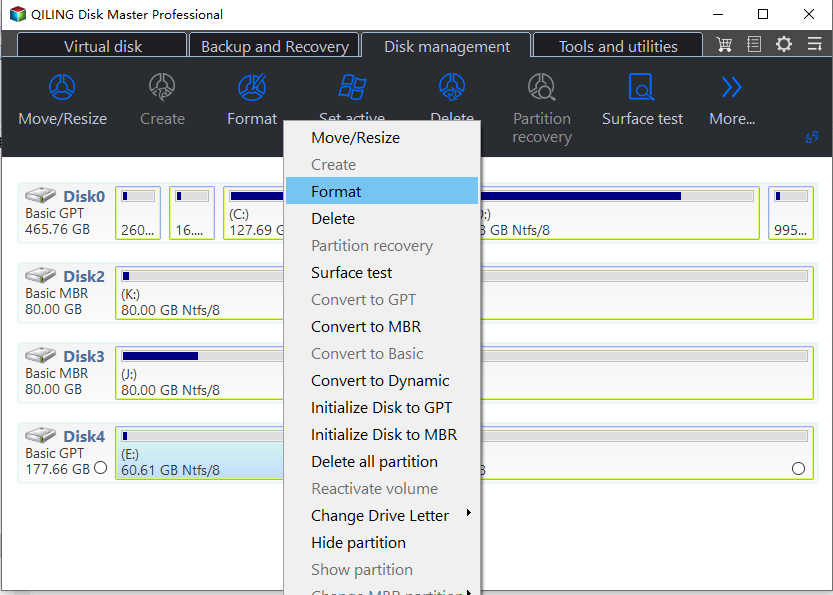
Step 3. Enter a clear label, choose NTFS, and keep the default cluster size unless a device requires another value.
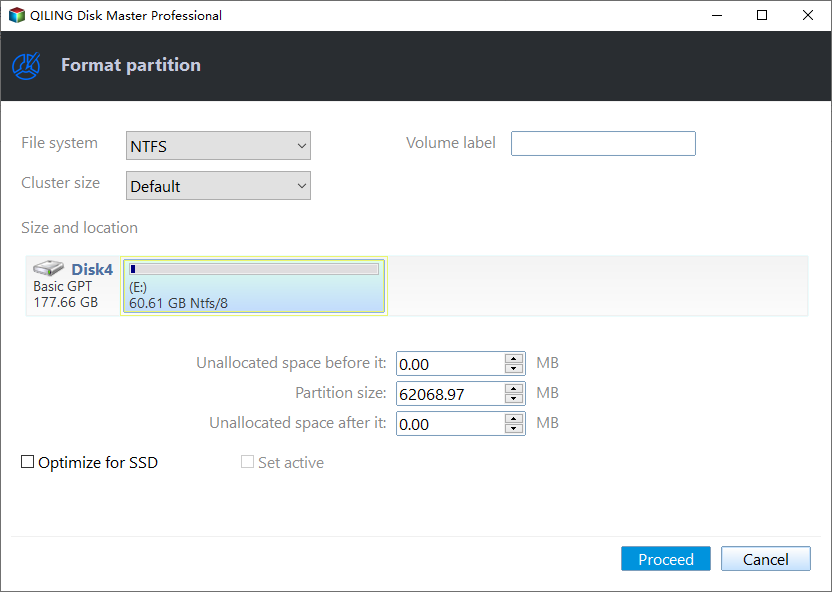
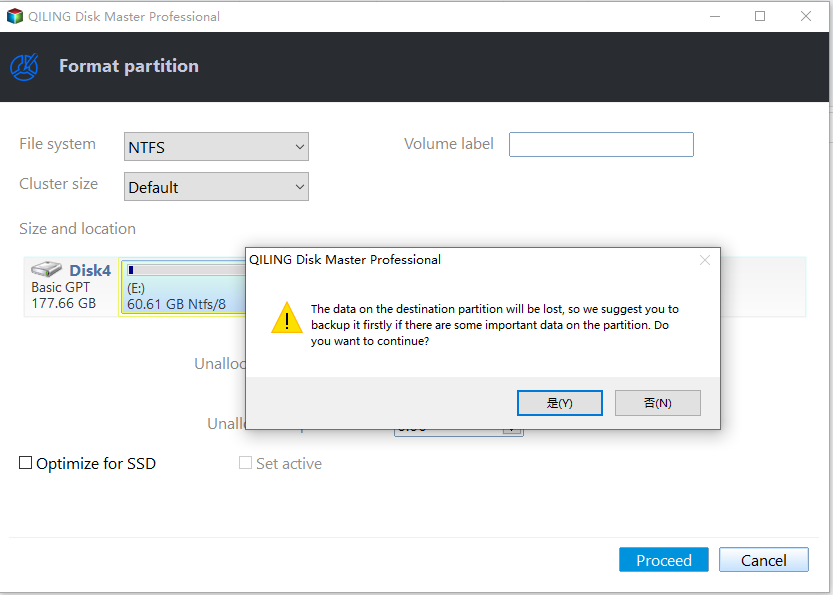
Step 4. Review the preview, then click Proceed to apply the format operation.
Check the result
Open Properties and confirm the file system is NTFS. Test large files, permissions, and any backup task that requires NTFS.
Related Articles
- Convert FAT32 to NTFS Windows 10
Convert a Windows drive to NTFS after checking file system needs. - Convert FAT32 to exFAT
Choose exFAT when removable storage needs large-file support across devices. - Can CMD Convert exFAT to NTFS?
Find out why Windows Convert does not support exFAT and how to back up, format, and restore the volume.
Products
Articles & Tutorials
- Data Recovery
- Data Backup
- File Recovery
- File Backup
- File synchronize
- System Backup and Restore
- Disk and Partition Clone
- Technical articles
- Disk Master Help
- Windows Deleted File and Disk Recovery Tutorials
- Windows File and Data Recovery Tutorials
- More Windows Tutorials for Install, Security, Files, and PC Tips
- Windows Boot, Repair, and Recovery Environment Tutorials
- Windows Backup Tutorials
- Windows Restore Tutorials
- Windows Clone and Migration Tutorials
- Windows Server Backup, Recovery, and Management Tutorials
- Windows Disk, Partition, and Storage Management Tutorials