Best Backup Strategy for Multiple Windows Servers in the LAN
The necessity of an effective server backup strategy
Windows Servers are critical machines that provide network services to multiple users and often store sensitive business data. If a server fails or data is lost, many clients may be affected. A comprehensive server backup strategy protects both the server system and the data it holds, helping reduce downtime and maintain business continuity.
For centralized management, compare this strategy with centralized backup software.
A reliable server backup solution should meet several expectations: automatically back up data at regular intervals, store backups in a secure location such as a network share or NAS, support quick recovery when failure occurs, and provide a clear interface for monitoring backup status.
- A centralized management and backup system can oversee and protect desktops, laptops, and servers on the network.
- Configure backup settings for each task, including the backup schedule, destination, and retention scheme.
- Monitor backup tasks for all clients from a central control server and quickly identify failed or incomplete jobs.
- Save time, labor, and administrative costs.
To carry out the server backup strategy, a centralized server backup software will be a big help.
Best server backup software for centralized data protection
Qiling Backup provides Windows Server backup solutions, supporting PCs running Windows 11/10/8/7/XP and servers running Windows Server 2022/2019/2016/2012/2008.
With Qiling Backup, you can create centralized backup tasks on the central machine while the Agent package runs on client PCs or servers, allowing you to manage backups from a single point of control.
✦ 6 backup options are available: System, Disk, Partition, File, SQL Server Backup, and Virtual Machine Backup. Additionally, users can centrally back up data to a target path.
✦ Automatic backups can be scheduled to occur once, daily, weekly, or monthly, with options for full, incremental, or differential backup.
✦ Customize backup Settings, including retention policy and email notification.
Qiling Backup offers customized and unlimited plans, allowing you to choose the edition that fits your business needs and budget, with a 30-day free trial available.
How to apply centralized server backup strategy in the LAN?
☞ Preparations:
- Install Qiling Backup on one of the computers within the same Local Area Network (LAN) as the central management console.
- To install the Qiling Backup client program on all client computers, launch Qiling Backup, select Add Windows device, then Install client program, and follow the wizard to install the Agent program.
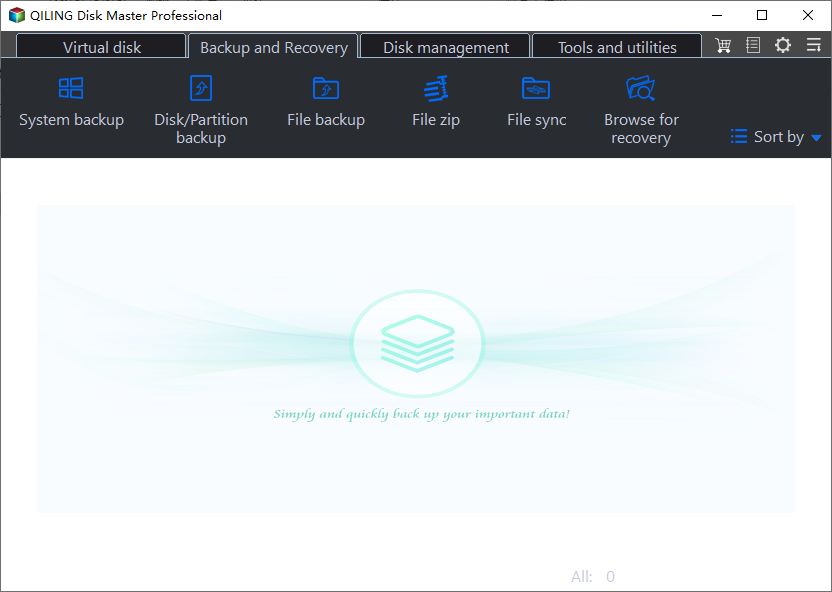
☞ Backup process:
To create a new task to back up multiple Windows Servers simultaneously, use Qiling Backup on the central console. After the client servers are connected, configure the backup source, destination, schedule, and retention policy in one task.
1. Go to Backup Tasks tab, select System Backup.
2. Select the systems you want to back up, and then choose a destination such as a network share, NAS, or other available storage path.
3. Configure automatic backups so the task runs regularly without manual intervention.
4. Configure Backup Cleanup and Email Notification for your backup task.
☞ Backup Cleanup: To automatically delete older backups and save storage space, create a retention rule that keeps only the backup versions you need.
☞ Email Notification: Enable email notification to receive messages when a task succeeds, fails, or requires attention.
5. Confirm the operation and proceed. You can choose "Add the backup and proceed now" or "Add the schedule only".
To back up servers centrally, create a backup task that appears in the Backup Tasks tab, where you can manage, edit, run, or restore it to another client computer when needed.
Summary
Qiling Backup is a practical solution for implementing a home server or small business server backup strategy. It centralizes backup creation, monitoring, cleanup, and recovery, helping protect multiple Windows Servers and PCs with less manual work.
Related Articles
- How to Create and Manage Client Computer Backups?
Learn how to Create and Manage Client Computer Backups with clear steps, key checks, and practical tips. - Windows Server 2019 Backup | How to Make It Easily?
It has been almost three years since Windows Server 2019 first released. If you are using this server system, it is strongly recommended to backup Windows Server 2019 for security, including system state and important settings. - How to Clone Hard Drive on Windows Server 2016/2012/2008?
Learn how to Clone Hard Drive on Windows Server 2016/2012/2008 with clear steps, key checks, and practical tips. - Windows Server Backup Bare Metal Recovery to Different Hardware
This guide explains Windows Server Backup Bare Metal Recovery to Different Hardware with clear steps, key checks, and practical tips. - How to Take System State Backup in Windows Server 2008 (R2)
You will learn 3 methods to take system state backup and recovery in Windows Server 2008 (R2), including using Windows Server backup utility, command line or third-party server backup software. - Windows Server 2012 End of Life: How to Prepare for It
Windows Server 2012 and 2012 R2 will no longer receive security updates or technical support from Microsoft after October 10, 2023, putting users at risk of security vulnerabilities and data breaches.
Products
Articles & Tutorials
- Data Recovery
- Data Backup
- File Recovery
- File Backup
- File synchronize
- System Backup and Restore
- Disk and Partition Clone
- Technical articles
- Disk Master Help
- Windows Deleted File and Disk Recovery Tutorials
- Windows File and Data Recovery Tutorials
- More Windows Tutorials for Install, Security, Files, and PC Tips
- Windows Boot, Repair, and Recovery Environment Tutorials
- Windows Backup Tutorials
- Windows Restore Tutorials
- Windows Clone and Migration Tutorials
- Windows Server Backup, Recovery, and Management Tutorials
- Windows Disk, Partition, and Storage Management Tutorials