How to Transfer Files in Safe Mode Windows 10/8/7
Need to transfer files in safe mode Windows 10/8/7
Windows users may encounter a problem where the system fails to boot, which can be caused by a variety of factors.
If you've backed up your system before, you can restore your computer to an earlier date using the backup image, which can save you from reinstalling Windows. However, this might result in losing important data on your desktop during the recovery process.
To prevent data loss when restoring a system, it's recommended to transfer important files to an external hard drive in advance, especially when the system is in a state where it can't boot normally, such as in safe mode. This way, you can ensure that your files are safe and won't be affected by the system restoration process.
Transfer files in safe mode using WBadmin commands
WBadmin is a command backup utility that allows you to backup data from Safe Mode using a command prompt or PowerShell on Windows 10. With WBadmin commands, you can transfer files even when your system fails to boot, making it a useful tool for recovering data in emergency situations.
1. Start your computer, and press the F8 key repeatedly.
2. To access the Advanced Boot Options, follow the instructions to restart your computer. Once it boots up, use the arrow key to select "Safe Mode with Command Prompt" from the menu.
3. To backup data from a failed system, you will enter the command prompt and use the WBadmin command to backup data from the failed system. For example, to backup the C: drive to an external hard drive (F:), you would type the following commands:
Wbadmin Proceed -backuptarget:F:-include:C:
* If you need to replace the hard drive, use WBadmin to backup the whole hard drive to keep all old data.
4. After running the command, the system will enter Safe Mode and display a message asking for your confirmation. Simply type "Y" to initiate the backup process, and the files will be transferred out once the operation is complete.
Transfer files when boot into Safe Mode failed
If you can't boot into Safe Mode, you can try using a live USB or CD to transfer files. This will allow you to access your files without having to boot into your normal operating system. Alternatively, if you have a second computer, you can connect the two via a network and transfer files that way.
If you're unable to transfer files in Safe Mode on Windows 10/8/7, you can create a bootable disc using the Qiling Disk Master Standard to boot your computer and transfer files to an external hard drive before system recovery or OS reinstallation.
Step 1. Download and install Qiling Disk Master on a working Windows 10/8/7 PC. Then, go to Tools -> Create Bootable Media to create a bootable disc.
Step 2. To access the BIOS, you'll need to restart the computer and immediately start pressing the BIOS key (usually F2, F12, or Del) until the BIOS menu appears. Once in BIOS, navigate to the Boot Order or Boot Priority section and change the boot order to prioritize the USB drive or CD/DVD drive containing the bootable media. Save the changes and exit BIOS, then your computer should boot from the media.
Step 3. Here you can choose File Backup under Backup tab to transfer files to another place.
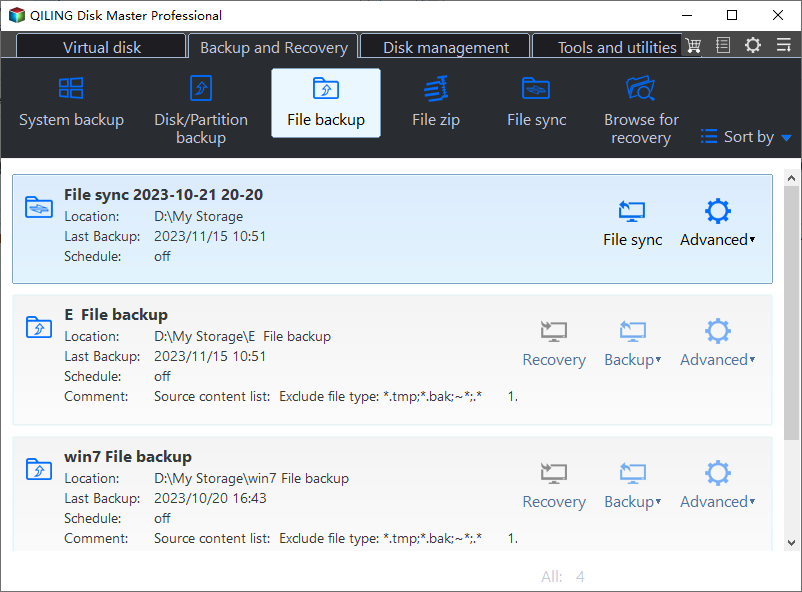
To copy an entire hard drive, you can choose Disk Clone under the Clone tab.
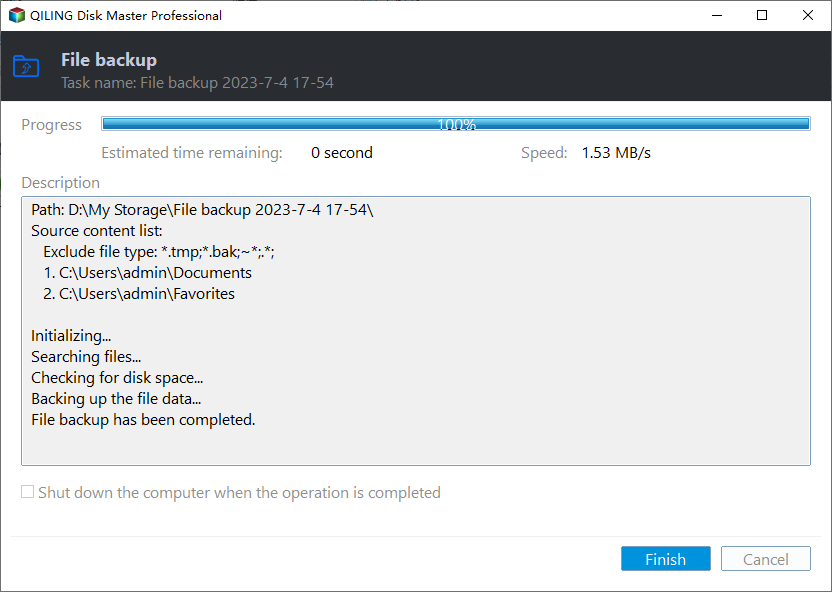
Step 4. Choose the files you want to backup, select the target drive, and click Proceed to execute the task.
Conclusion
If your system can't boot, try transferring files in Safe Mode, or if that's not possible, you can still move files to another location without booting Windows.
Qiling Disk Master is a powerful tool that enables you to create bootable media, allowing you to recover data from a boot failed hard drive. It serves as a great backup and restore software, as well as a hard drive cloning tool, providing a reliable solution for data recovery and transfer.
You can protect unlimited computers within your company by using Qiling Disk Master Technician, which also allows you to deploy or restore system image files on server-side computers to multiple client-side computers over a network using its built-in Qiling Image Deploy tool.
Related Articles
- How to Perform System Restore in Safe Mode Windows 10?
- How to Do System Restore in Safe Mode Windows 7?
- Password Protect USB Drive in Windows 10 Easily (2 Ways)
You can learn 2 easy ways to password protect USB drive in Windows 10, including Windows built-in feature and the professional third-party software. You can read on to know the detailed information. - Windows 10 Home Sync Center | Alternative & Guide
Follow this guide for Windows 10 Home Sync Center | Alternative & Guide, with practical steps for moving, sharing, or syncing files and photos safely. - File Transfer Stops/Freezes in Windows 10 | Solved
This guide explains File Transfer Stops/Freezes in Windows 10 | Solved with clear steps, key checks, and practical tips. - How to Transfer Files in Safe Mode Windows 10/8/7
Here you can learn how to transfer files in safe mode of Windows 10/8/7 when Windows fails to boot. Follow the steps and try to copy files to external hard drive in safe mode.
Products
Articles & Tutorials
- Data Recovery
- Data Backup
- File Recovery
- File Backup
- File synchronize
- System Backup and Restore
- Disk and Partition Clone
- Technical articles
- Disk Master Help
- Windows Deleted File and Disk Recovery Tutorials
- Windows File and Data Recovery Tutorials
- More Windows Tutorials for Install, Security, Files, and PC Tips
- Windows Boot, Repair, and Recovery Environment Tutorials
- Windows Backup Tutorials
- Windows Restore Tutorials
- Windows Clone and Migration Tutorials
- Windows Server Backup, Recovery, and Management Tutorials
- Windows Disk, Partition, and Storage Management Tutorials