How to Sync Two Directories in Windows 10 Automatically
Quick Navigation:
- Can I sync two directories in Windows 10 automatically?
- Why sync two directories in Windows 10?
- How to sync two folders in Windows 10?
- Step by step guide: automatically sync two folder in Windows 10
- Over to you
Can I sync two directories in Windows 10 automatically?
Why sync two directories in Windows 10?
Keeping two directories in sync in Windows is a common operation that involves creating a duplicate copy of a directory. This is often done to maintain a backup of important files, ensure data integrity, or to have a duplicate set of files for testing or development purposes.
Sync two directories as backup copy: You can sync files to an external drive or network drive as a backup, so if the local drive is damaged, you can recover from the synced files.
Improve working efficiency: With multiple copies, work can be taken out of the office and completed at home, thanks to syncing, which helps everyone stay informed and complete tasks more effectively, and syncing two folders in real time in Windows can provide instant awareness of changes.
Keep precious memory: In addition to work requirements, family members may also want to sync two directories in Windows, such as syncing photos or videos between different folders after a trip.
Surely, you probably have other reasons to do synchronization. Whatever it is, now, finding out how to sync two directories in Windows 7, 10 or XP is the most urgent task.
Best folder sync software for Windows 10
Microsoft's SyncToy allows you to sync folders between drives, but it can be tricky to schedule syncs and lacks advanced features like real-time file syncing.
If you want to sync two folders automatically, especially for real-time sync, this method may not be the best choice. Instead, consider using third-party file sync software like Qiling Disk Master Professional, which can sync folders in different locations, including external drives, network drives, cloud drives, or NAS, and even sync folders between different computers in the same network segment.
Please download the best folder sync software for Windows 10 to have a try!
Qiling Disk Master supports various Windows versions, including Windows 10, 8, 8.1, 7, XP, and Vista, making it compatible with Windows 7 and other PC systems. For server-based computers, Qiling Disk Master Server is an alternative option.
Step-by-step guide: automatically sync two folders in Windows 10
To sync two folders in Windows 10 on a schedule, first, connect any external storage devices, such as an external hard drive, to your computer. Next, open File Explorer and select the two folders you want to sync. Then, right-click on one of the folders and select "Properties".
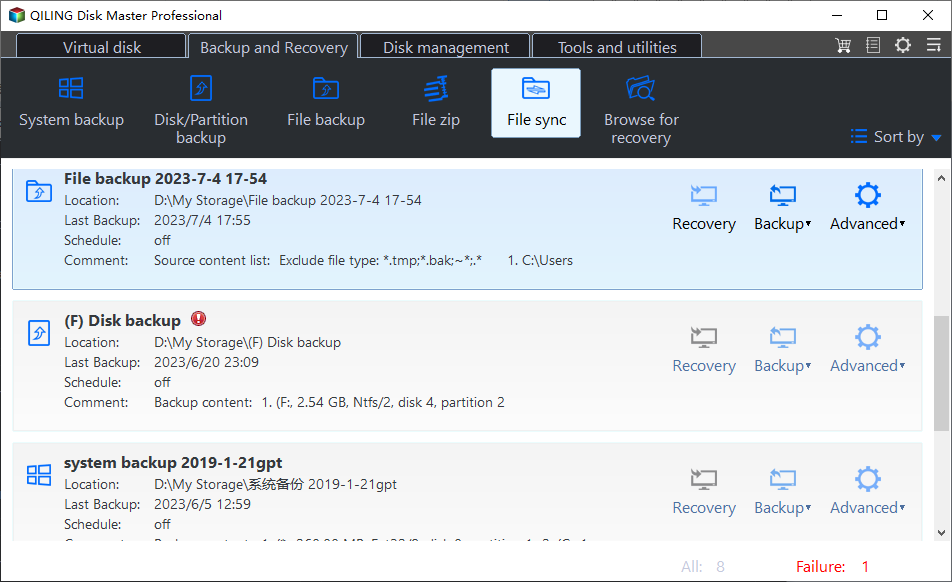
Step 1. Run Qiling Disk Master, click Backup and recovery at the sidebar and select File Sync.
More sync methods for Windows 10:
File Sync will continuously monitor changes to files and sync them in real-time, ensuring that all devices and locations have the most up-to-date versions of the files.
File Sync will synchronize files from a source to a destination directory, overwriting any existing files in the destination and deleting any changes made in it.
Two-Way Sync will sync changes from one directory to another once you make any changes to one of the directories in this task.
Step 2. To sync two directories, click the "Folder" button to select the first directory, and then click the folder-shaped button below to choose the second directory. If the second directory does not exist, consider creating one first.
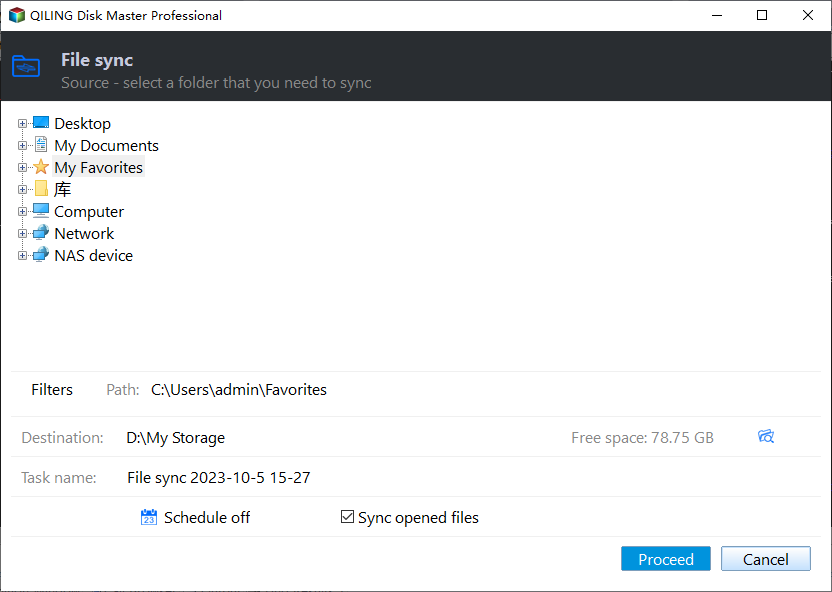
Note: For destination, you can sync files to external hard drives, network drives, cloud drives, or USB thumb drives.
Step 3. Noticed the Schedule Sync option? Click and enable it, then select the schedule settings you like.
- Daily, Weekly, Monthly: To sync files, you would like to set up a schedule that runs every 1-6 hours throughout the day, as well as weekly and monthly syncs. Is that correct?
- Event triggers (advanced edition): The software allows you to sync files at specific events, such as system startup, shutdown, user logon, or user logoff.
- USB Plug in (advanced edition)This tool can automatically sync two directories as soon as a USB drive is plugged in, eliminating the need to manually insert it before starting a task.
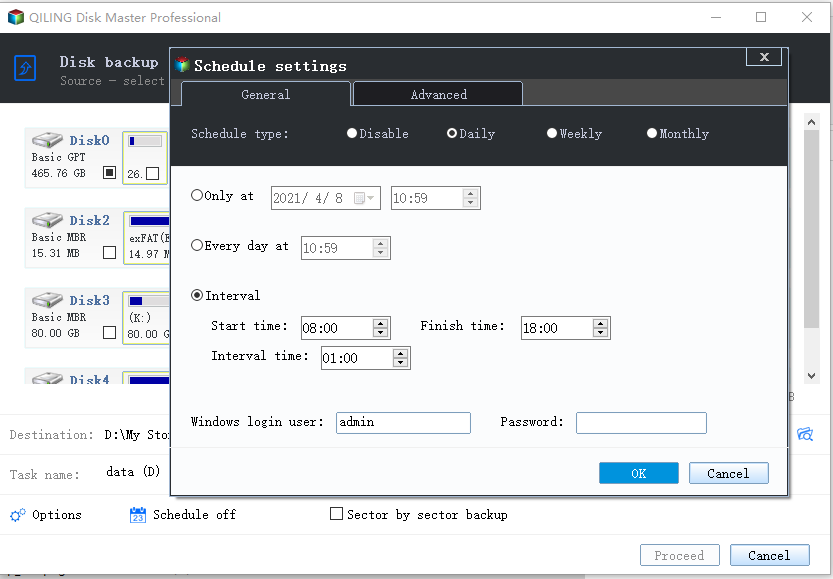
Step 4. To save this configuration, click Proceed > Add the schedule and Proceed now. This will sync directories for the first time right now.
Over to you
Qiling Disk Master is a useful tool for Windows 10 users, allowing for simple directory synchronization with just a few clicks. Its straightforward operations and practical schedule sync settings make it a valuable asset. Additionally, it serves as a backup and restore software, as well as a clone tool, making it a convenient option for deploying Windows 10 when repairing or replacing a computer, or upgrading a hard disk.
To make files on the network drive available offline, use the built-in tool - Sync Center, which allows you to enable offline files and sync network files to a local computer.
Related Articles
- 3 Ways to Make Windows Sync Folders between Computers
- How to Sync Two Folders on Same Computer or Between Computers
- How to Sync Folders over Network?
- How to Transfer Files in Safe Mode Windows 10/8/7
Here you can learn how to transfer files in safe mode of Windows 10/8/7 when Windows fails to boot. Follow the steps and try to copy files to external hard drive in safe mode. - How to Comment on Backups for Clear Distinction
A backup comment enables you to distinguish a backup image from other easily. Qiling Disk Master allows you to create a backup with a note within several steps. - How to Schedule Backup Files and Folders in Windows 11/10/8/7
Schedule backup files and folders that you don't want to lose, so you can keep important data safe and always reserve the possibility to retrieve an older version. Here's how you can do it in Windows 11, 10, 8, 7.
Products
Articles & Tutorials
- Data Recovery
- Data Backup
- File Recovery
- File Backup
- File synchronize
- System Backup and Restore
- Disk and Partition Clone
- Technical articles
- Disk Master Help
- Windows Deleted File and Disk Recovery Tutorials
- Windows File and Data Recovery Tutorials
- More Windows Tutorials for Install, Security, Files, and PC Tips
- Windows Boot, Repair, and Recovery Environment Tutorials
- Windows Backup Tutorials
- Windows Restore Tutorials
- Windows Clone and Migration Tutorials
- Windows Server Backup, Recovery, and Management Tutorials
- Windows Disk, Partition, and Storage Management Tutorials