Easily Clone SSD to SSD in Windows 11 with the Best Migration Tool
User Case
Can you clone one SSD to another SSD?
Hey guys, it's probably been asked a million times but I'll still ask again.
You can clone your existing SSD to the new one, which will transfer all your files, programs, and settings to the new drive without reinstalling Windows. This process is called cloning and is usually done using software like Qiling Disk Master. The cloning process will create an exact copy of your old SSD on the new one, so you won't lose any data or have to reinstall Windows.
If you're looking to replace or upgrade your old SSD with a new or larger one, you'll likely need a reliable disk cloning software to help with the process.
Keep reading to learn more details.
In What Cases Should You Clone an SSD?
If you're experiencing situations such as running out of space on your current SSD, needing to upgrade to a larger one, or wanting to transfer your data to a new drive, you should consider cloning your SSD.
• If your computer or laptop is running slowly and taking a long time to boot, it may be due to various reasons such as outdated software, excessive usage, or hardware issues. To resolve this issue, you can try restarting your device, updating your operating system and software, running a disk cleanup and disk defragmentation, and checking for malware or viruses.
• When you desire better speed and performance.
• When your system drive is almost full, cloning to a larger SSD can help you run your computer smoothly, especially if you don't have enough space for Windows 11 updates.
• To avoid reinstalling programs on Windows 11, make a clone of your current Windows 10 installation to save yourself the hassle of reinstalling all your programs and losing personal data.
• When you want to save time, a larger SSD can ensure your Windows computer works quickly, saving you time.
Best SSD Cloning Software in Windows 11
In Windows 11, you can't perform disk cloning using the operating system's built-in tools. Instead, you'll need to rely on third-party software to clone your disks. It's crucial to find a trustworthy cloning software that not only helps you transfer your data or operating system but also ensures the integrity of your data and maintains a secure boot from the new disk.
Qiling Disk Master Professional is the best comprehensive disk cloning software for Windows 11/10/8/7/XP/Vista, allowing you to copy a disk successfully and ensuring secure boot. With its features, you can achieve a seamless disk cloning experience.
1. An intelligent clone allows you to clone a disk to a smaller SSD without any issues, as it only clones used sectors. This means you can successfully boot from the cloned SSD, even if it's smaller than the original disk.
2. SSD alignment. Cloning a disk to an SSD can significantly improve the read and write speeds, enhancing the overall performance of the SSD.
3. Live clone. It can perform disk cloning tasks in the background without interrupting normal computer use.
4. The sector-by-sector clone can clone all sectors, whether they are used or not, making it a powerful tool for backup and recovery purposes.
5. Supports multiple SSD types and brands. It supports various types (SATA, NVMe, PCIe, M.2, U.2) and brands (Samsung, Seagate, WD, Intel, etc.) in one paragraph.
Moving on, I will show you how to clone SSD to a larger SSD in Windows 11 via Qiling Disk Master in the following part.
How to Clone SSD to a Larger SSD Using Qiling Disk Master
Let's explore how to easily clone Windows 11 to an SSD using the best software. To do this, you can follow a stepwise guide that involves using software to clone the operating system from the original drive to the new SSD, making it easy to transfer your Windows 11 installation to the faster storage.
To prepare for the cloning process, it's essential to back up any important data on the target SSD to prevent loss during the overwrite.
Now let's follow the instructions below.
Step 1. Connect the target SSD to your computer and ensure it can be detected. Then, download and install Qiling Disk Master Professional, and open the software to proceed.
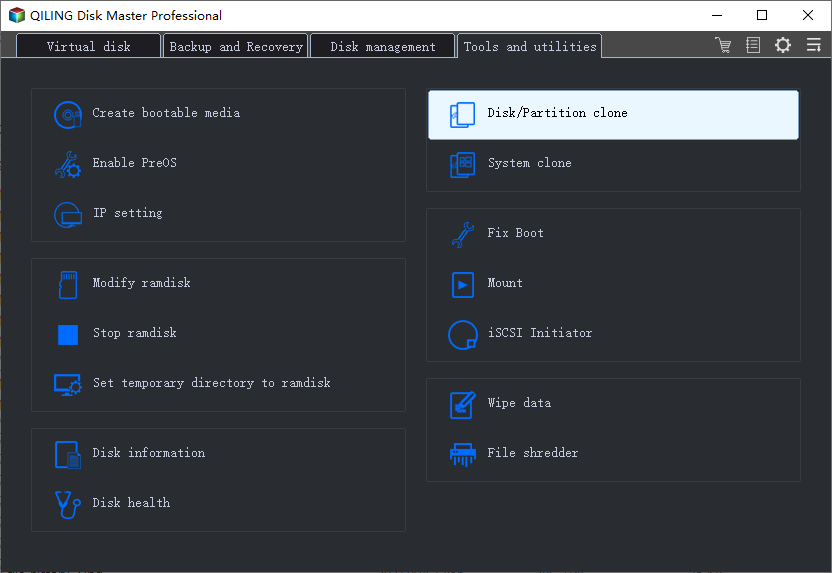
Step 2. Select the "Tool and utilities" tab page and then select "Disk Clone" from it.
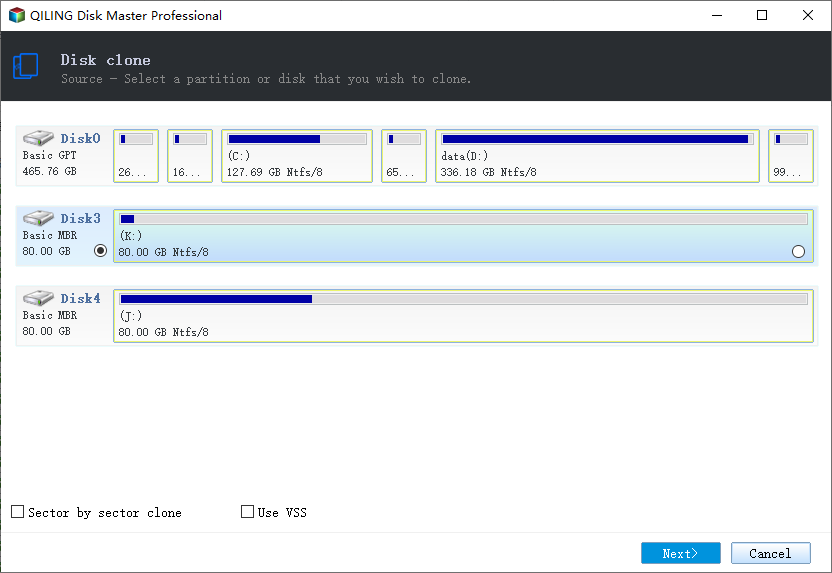
Step 3. Select the source SSD that you want to clone. Click Next.
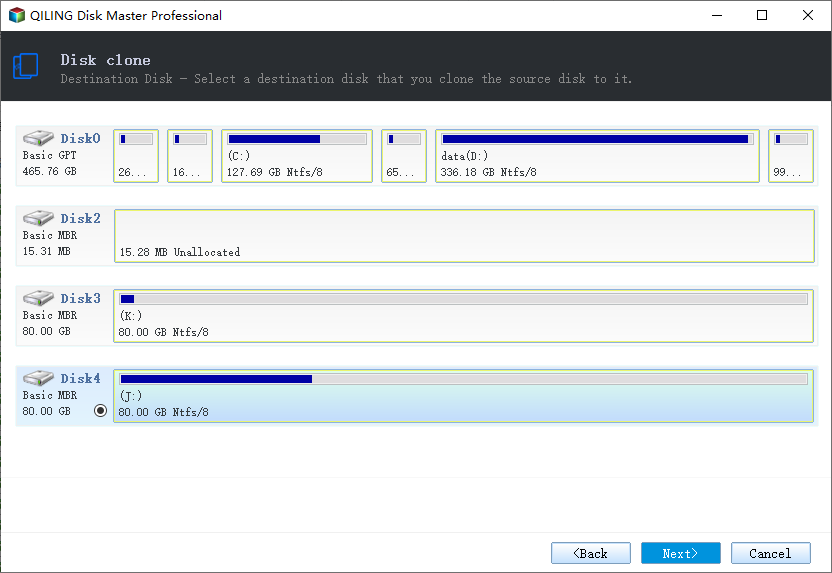
Step 4. Select the SSD as the destination disk to which the source disk will be cloned, then click "Next".
Step 5. Preview the information of your source and destination disk. In the lower-left corner, set desired advanced settings as follows.
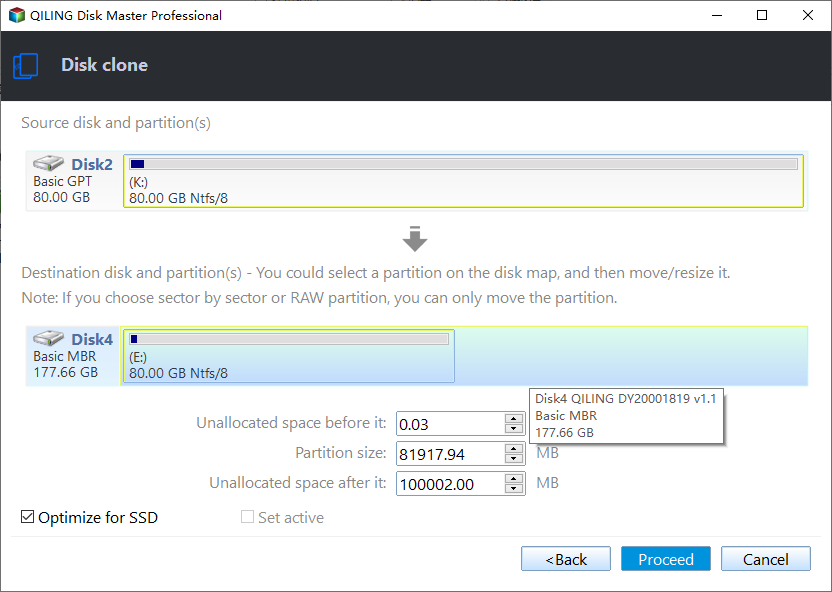
Notes:
Edit PartitionsYou can modify the partition size on the destination disk using this function.
Sector by Sector CloneIt will clone all sectors, whether it contains any data or not, and this feature is generally available when cloning disks of the same or larger size.clone from a large disk to a small one, checking this option will cause clone failure instead.
SSD Alignment: Enabling TRIM on the SSD disk will increase the reading and writing speed of the disk, making it a good option to consider when cloning to an SSD.
Step 6. Click on the "Install" button to initiate the installation process. Then, click Proceed. Wait for the process to complete and then click "Finish".
Boot from Cloned SSD
To make the newly cloned SSD bootable, you'll need to follow these steps:
1. Reboot your computer and press F2/F10/Del to enter the BIOS.
2. To set the new SSD as the first boot option in the BIOS, go to the boot menu, navigate to the boot priority section, and select the new SSD as the first boot option.
3. To save the changes and boot your computer, press the F10 key. This will save the modifications you've made to the BIOS settings and restart your computer.
Conclusion
Cloning an SSD to a larger one in Windows 11 is a straightforward process. Using Qiling Disk Master, you can easily migrate to a larger SSD, utilizing the full potential of Windows 11 and avoiding potential computer failure issues. This process is not only safe but also fast and easy, making it a great solution for users looking to upgrade their storage capacity.
The software provides various efficient functions, including backing up Windows 11 to a USB drive, disk backup, and more, allowing you to securely save your PC or important files and data before cloning. Additionally, it enables effortless restoration of Windows 11 to a previous date, providing peace of mind in case of system crashes.
Related Articles
- Easily Migrate Windows 11 to SSD Without Reinstalling
You can learn an easiest way of migrating Windows 11 to SSD. It's using a professional disk clone software. - Perform a Bootable Clone on Windows 11-NO Data Loss
This page explains how easy it is to perform a bootable clone on Windows 11 without losing any data. Continue reading for details on how to migrate your system and data. - Best Freeware to Clone ssd to New ssd in Windows 11, 10, 8, 7
The best way to clone SSD to new SSD with larger capacity is using specialized cloning software which helps you clone the entire SSD (Solid State Drive) to your new SSD with the intact stuff. - Best Way to Backup Outlook Emails to Thumb Drive Easily
Backup Outlook emails to thumb drive can save your important files from accidental issues. This guide will explain the best way to do the task with a few clicks. - Top 8 Ways to Fix 100% Disk Usage in Windows 11
To fix 100% disk usage in Windows 11 and keep your computer running smoothly, follow the most effective solutions and use a reliable disk backup tool. - How to Backup C Drive on Windows 11 | 2 Ways
This article explains the necessity and reasons to backup C Drive on Windows 11, and also presents 2 feasible ways to perform such execution.
Products
Articles & Tutorials
- Data Recovery
- Data Backup
- File Recovery
- File Backup
- File synchronize
- System Backup and Restore
- Disk and Partition Clone
- Technical articles
- Disk Master Help
- Windows Deleted File and Disk Recovery Tutorials
- Windows File and Data Recovery Tutorials
- More Windows Tutorials for Install, Security, Files, and PC Tips
- Windows Boot, Repair, and Recovery Environment Tutorials
- Windows Backup Tutorials
- Windows Restore Tutorials
- Windows Clone and Migration Tutorials
- Windows Server Backup, Recovery, and Management Tutorials
- Windows Disk, Partition, and Storage Management Tutorials