How to Migrate Windows 7 to SSD without Reinstalling?
Why migrate Windows 7 to SSD?
You can migrate Windows 7 to your new SSD by creating a backup of your current Windows installation using the built-in System Image Backup tool, then reinstalling Windows on the SSD and restoring the image to the new drive. Alternatively, you can use a third-party cloning software like Qiling Disk Master to clone the entire HDD to the SSD, which will preserve the OEM activation. Be sure to back up your data and follow the software's instructions carefully to avoid any issues.

Migrating your OS from a Hard Disk Drive (HDD) to a Solid-State Drive (SSD) in Windows can significantly speed up your computer's performance, making it start faster and reducing downtime. This process allows you to transfer your operating system to a new hard drive or even to a different computer, while improving your computer's overall performance.
Software to migrate Windows 7 to SSD
Transferring Windows 7 to a Solid-State Drive (SSD) can be done in two ways: using Windows tool or third-party software. Some SSD brands, like Samsung, come with their own data migration utilities, such as Samsung Data Migration, which can be used for migration. However, for a more versatile and universal solution, I recommend using Qiling Disk Master Professional, a comprehensive OS or data migration tool.
This software helps move Windows operating systems from a hard drive to a solid-state drive (SSD), supporting Windows 11, 10, 8, and 7. It features a built-in "Migrate OS to SSD" tool that enables the transfer of the system drive and its related partitions to the SSD without requiring a reinstall. The process can be completed with just a few mouse clicks.
- ★Before proceeding:
- Connect the SSD drive to your computer and ensure it is detected by your operating system successfully.
- To ensure there is enough unallocated space on the SSD drive to hold the Windows partition, you need to have at least 64GB of free space available. This is because Windows 10 requires a minimum of 64GB of free space to install and run properly.
Step 1: To start, connect the SSD to your computer and ensure it can be detected. Next, download, install, and launch Qiling Disk Master, a software tool that will help you complete the task at hand.
Step 2: On the top toolbar, select "Tools" and click "System Clone".
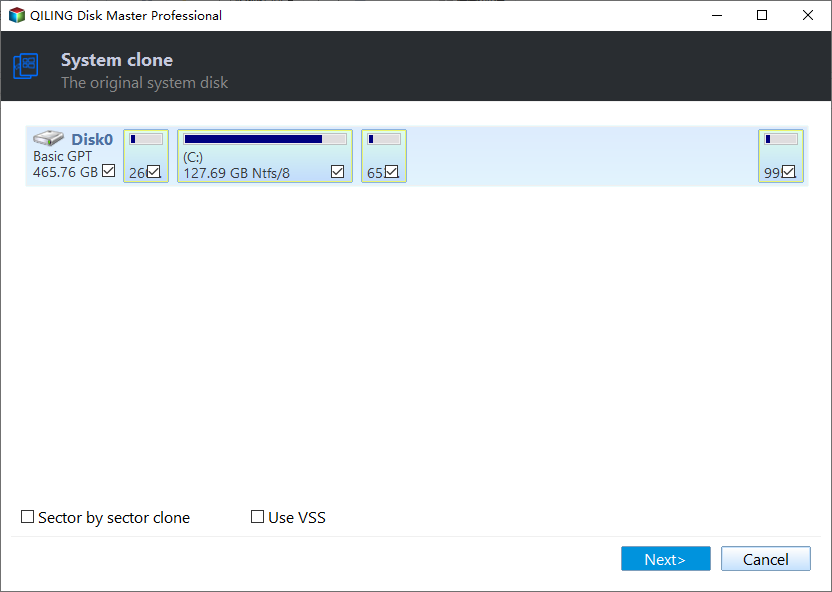
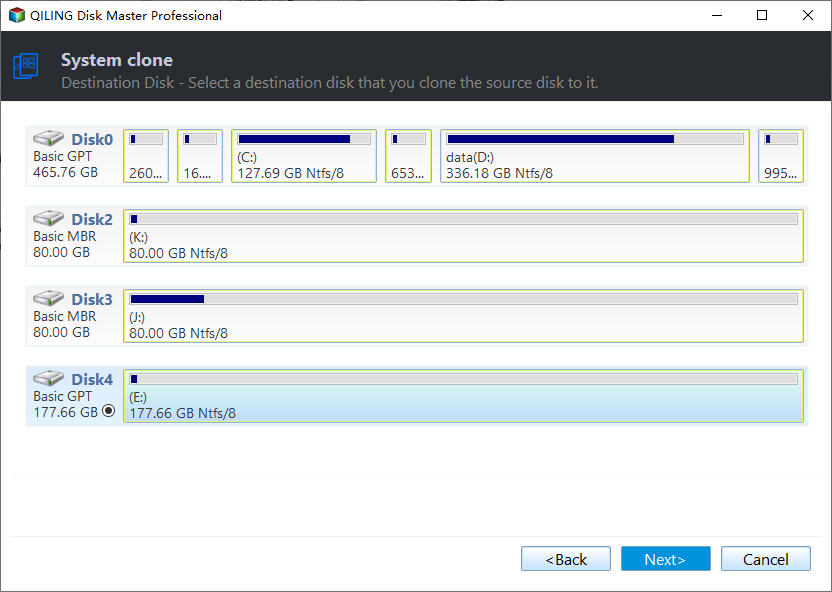
Step 3: Before formatting the drive, select the SSD as the destination disk and note that all existing partitions will be deleted if the option is enabled. It is recommended to back up important files beforehand to avoid data loss.
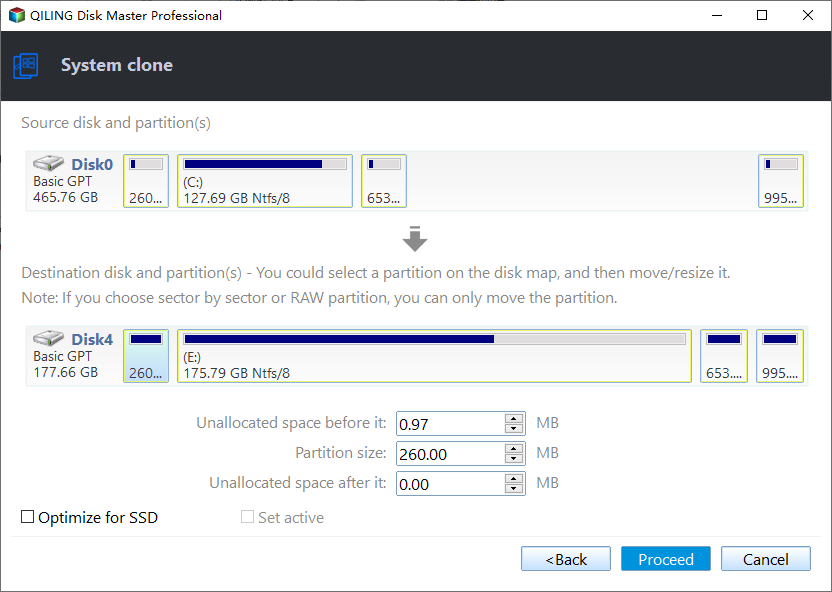
Step 4: The partition on the destination disk can be resized before moving Windows 7 to the SSD. However, keep in mind that this process may erase all data on the destination disk.
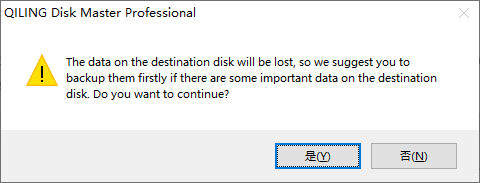
Step 5: Click "Proceed" to execute the operations. It will complete the task in Restart mode.
If you want to migrate all data on a Windows 7 hard drive to an SSD without reinstalling everything, you can use the "Disk Clone Wizard" to clone the entire disk to a different one.
Summary
The Qiling Disk Master Standard is a useful tool for migrating Windows 7 to an SSD, and its Pro version offers additional features such as wiping a hard drive, moving apps between partitions, aligning partitions on an SSD, and testing SSD speed. Additionally, the Qiling Disk Master Server Edition allows its use on Windows Server computers.
Related Articles
- 3 Ways to Shrink Volume in Windows 8 or 8.1 to Extend Another Volume
If you need to shrink a volume in Windows 8 or 8.1 to extend another volume, there are three methods you can try to shrink a basic volume. - Best Way to Backup Windows Server 2008 to NAS/Network Share
This article tells you how to get Windows Server 2008 automated backup to NAS or network share in simple steps. And you are able to keep multiple backups for disaster recovery. - Easiest Solution to Backup Windows Server to Amazon Drive
This article shows how to backup Windows Server 2008/2012/2016 (R2) files to Amazon Cloud Drive with Qiling Disk Master, which also supports backup to hubiC, OneDrive,Dropbox, etc. - Easily Schedule Automatic Backup Windows Server 2022 (3 Ways)
You can learn to schedule automatic backup Windows Server 2022 in 3 ways, both built-in tool and the third-party backup software can help you. Read on for details. - Solved: "File History Service Is Not Accessible" Error
The 'File History Service is not accessible' error can be frustrating, but it's easily fixable. To resolve this issue, you can try restarting the File History service, checking the event logs for errors, or running the System. - Fix - The File Too Large for the Destination File System
If the file is too large for the destination file system, you can refer to a post for guidance on how to resolve the issue without formatting the system.
Products
Articles & Tutorials
- Data Recovery
- Data Backup
- File Recovery
- File Backup
- File synchronize
- System Backup and Restore
- Disk and Partition Clone
- Technical articles
- Disk Master Help
- Windows Deleted File and Disk Recovery Tutorials
- Windows File and Data Recovery Tutorials
- More Windows Tutorials for Install, Security, Files, and PC Tips
- Windows Boot, Repair, and Recovery Environment Tutorials
- Windows Backup Tutorials
- Windows Restore Tutorials
- Windows Clone and Migration Tutorials
- Windows Server Backup, Recovery, and Management Tutorials
- Windows Disk, Partition, and Storage Management Tutorials