How to Fix Black Screen of Death HP Laptop/Computer
HP PC users may encounter the black screen of death error, a difficult-to-resolve issue that displays a black screen with a moving mouse pointer but no Windows features. To fix this, users can try 5 solutions, and if files are lost during the process, Deep Data Recovery can be used to retrieve them.
When Windows cannot start normally, Safe Mode startup steps can help with troubleshooting.
5 useful solutions to resolve black screen of death on HP computer
- Quick Navigation
- Method #1. 5 Ways for Fix Black Screen of Death HP Laptop
- Method #2. How to Recover Lost/Deleted Files from HP Computer
Method #1. 5 Ways for Fix Black Screen of Death HP Laptop
Solution #1: Hard Reset HP Laptop
To resolve the black screen of death on an HP laptop, start by turning it off, then press and hold the power button for 30 seconds to discharge any residual power. Next, unplug the laptop from the power source and wait for 30 seconds. Plug it back in, press the power button again, and release it. If the issue persists, try a hard reset by pressing the power button and holding it for 30 seconds while the laptop is plugged in.
Step 1. You should remove the battery from your laptop. This will help to discharge any remaining power in the system. Wait for the two minutes as instructed, then try to restart your laptop. If it still doesn't work, you can try to charge the battery for a few minutes and then try to restart your laptop again.
Step 2. Remove the power suppliers, such as the battery and power cable, as well as any external storage devices connected to the PC. Wait for two minutes and proceed to the next step.
Step 3. Reconnect the power on the laptop with the battery and power cable, restart the laptop, and wait for it to be fully opened.
Step 4. Sign in to your PC with your password and check to see if the black screen of death Windows 7 HP laptop issue has been resolved. If the issue persists, try booting in safe mode, then run a System File Checker (SFC) scan to verify the integrity of Windows system files.
If the issue remains, you should move to the next solution and try to see if it gets fixed.
Solution #2: Restart the Explorer.exe Process
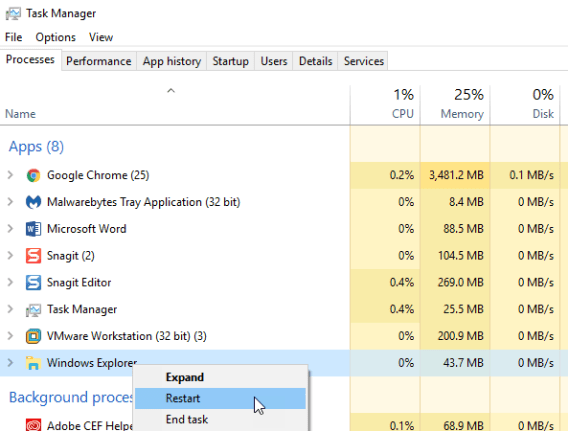
If your PC displays the HP notebook black screen of death, it could be due to the explorer.exe process being closed or not functioning properly. To resolve this, end and restart the Explorer.exe Process in Task Manager, which can be done by following a few easy steps.
Press the 'Ctrl + Alt + Del' keys simultaneously to open the Task Manager menu.
To access the 'explorer.exe' file, navigate to the 'Detail' tab and scroll down, then select the 'explorer.exe' file.
To resolve the issue where the Task Manager menu does not show explorer.exe, click on the "File" menu in the Task Manager and select "Run new task". In the "Create new task" dialog box, type "explorer.exe" and click "OK". This will restart the explorer.
To run a new task in the Task Manager, navigate to the 'File' menu and select 'Run new Task'.
Type 'explorer.exe' into the dialog box and click 'Enter' to run the process, then check if it runs. If it does, restart the PC to resolve the issue.
Solutions #3: Update Graphics Driver
To fix the HP black screen of death, you can try updating the Graphics Driver. If the chipset drivers or Graphic cards are outdated, updating them manually may resolve any issues with the graphic driver. To do this, follow these easy steps: [insert steps].
Click on 'Windows + X' and select 'Device Manager'.
To access the display adapter properties, navigate to the 'Display Adapters' section and right-click on 'Graphics', then select 'Properties' from the context menu.
Select 'Update Driver' from the 'Properties' screen.
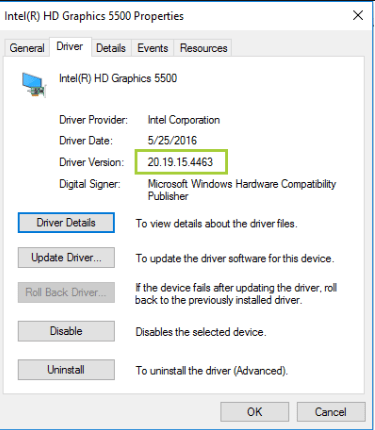
Select the 'Search automatically for updated driver software' from the dialog box and allow the update process to complete.
To resolve the issue of your HP laptop not turning on, you can try the following steps. Firstly, check the power cord and ensure it is properly connected to both the laptop and the power source. If the power cord is damaged, replace it with a new one. Next, check the power button on the laptop to ensure it is functioning correctly.
Solution #4: Disable Fast Startup
If you're experiencing the Black Screen of Death on your HP laptop, try disabling fast startup and booting in safe mode. To do this, you'll need to have your Windows installation media, which you can download and burn to a DVD or USB storage device. Once you have this, follow the steps to disable fast startup and boot in safe mode, which may resolve the issue with your laptop's screen.
Step 1. Connect the media to the HP laptop with the problem, turn it off, and boot it again from the installation media. Select 'Repair This Computer' when prompted, and you'll get a 'Select an Option' screen with options to continue to Windows. At this point, shut down the PC and troubleshoot it.
Step 2. Rick-click and select 'Troubleshoot Computer' then click 'Advanced Options' and then 'Startup Settings' and 'Restart'.
Step 3. Click on 'F5' or scroll down to 'Safe Mode with Networking' and click 'Enter' to get into the Safe Mode.
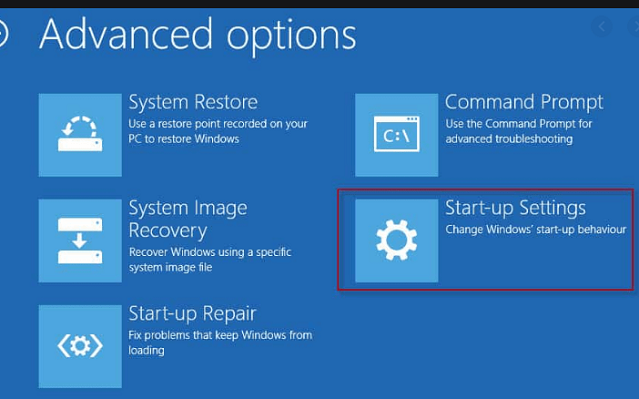
After this, you can choose to review the 'Default Display' and isolate the device causing the problem, then uninstall the Device Driver for Display and auto-install.
Solution #5: Undo Recent Changes by Restoring to a Restore Point
If your HP computer experiences a black screen after an update, you can easily resolve the issue by undoing the update and performing a system restore to bring your PC back to its optimal condition and fix the black screen of death problem. To do this, follow the steps below.
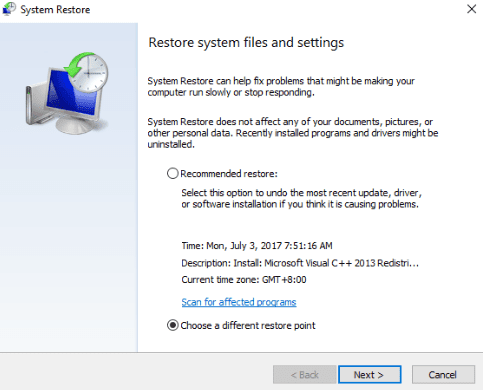
To access the System Protection settings in Windows, press the Windows key + R to open the Run dialog, type in 'Control Panel', and press Enter. Then, navigate to the Control Panel and click on 'System and Security'. From there, select 'System' and click on 'System Protection' to access the settings.
To restore your system to a previous state, click the 'System Restore' button and then click 'Next'. Select the desired 'Restore Point' from the list and click 'Next' to confirm your choice. This will initiate the system restore process, which will roll back your system to the selected state, reverting any changes made since the chosen restore point.
Click the 'Finish' button to confirm that you want to use the restore point. Then, restart your PC and the black screen of death should be resolved afterwards.
Method #2. How to Recover Lost/Deleted Files from HP Computer
If you lose data while trying to resolve the HP notebook black screen of death issue, you can recover your lost files using Deep Data Recovery software, which is safe, virus-free, and easy to use.
Step-by-step Guide for Data Recovery on HP Laptop after Black Screen of Death
Step 1. Download and install the Qiling data recovery software, then launch it. Select the file types to restore and click 'Next'.
Step 2. To recover deleted files in Windows 10 or 7, specify the location to scan and click 'Scan' after you are done, which may take a few minutes depending on the size of the files.
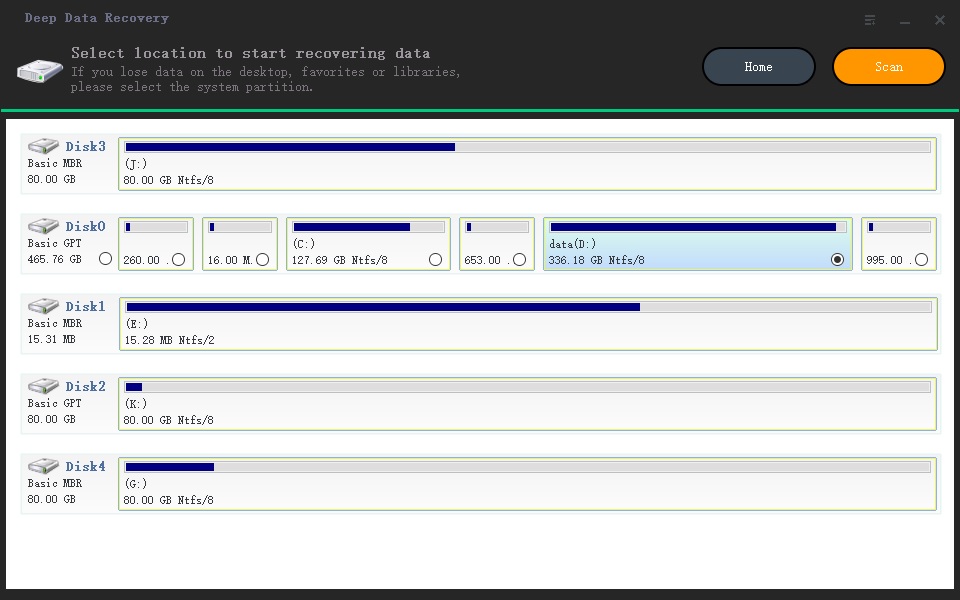
Step 3. When the scanning process is complete, preview the scanned files and click 'Recover' to save them. If you want to scan for more data, you can use the 'Deep Scan' mode.
The HP black screen of death can be caused by various reasons, including an incomplete Windows 10 installation, overheating, display issues, software or driver errors, power supply problems, or Windows update issues. Fortunately, the problem can be resolved by following the steps outlined below, which should help fix the issue and get your HP device up and running again.
Related Articles
- How to Recover Data after Blue Screen of Death
- Fix Kernel Security Check Failure in Windows
- How to Fix 'Error 0xc1900101' on Windows 11 Installation Assistant
- How to Fix 'Get Windows ready don't turn off your Computer'
- [Solved] Deleted File/Folder Not in Recycle Bin
- How to Fix Problem of 'Whea Uncorrectable Error' in Windows 8
- Fix Win 10 PC Won't Shut Down – ShutDown Computer via CMD
Products
Articles & Tutorials
- Data Recovery
- Data Backup
- File Recovery
- File Backup
- File synchronize
- System Backup and Restore
- Disk and Partition Clone
- Technical articles
- Disk Master Help
- Windows Deleted File and Disk Recovery Tutorials
- Windows File and Data Recovery Tutorials
- More Windows Tutorials for Install, Security, Files, and PC Tips
- Windows Boot, Repair, and Recovery Environment Tutorials
- Windows Backup Tutorials
- Windows Restore Tutorials
- Windows Clone and Migration Tutorials
- Windows Server Backup, Recovery, and Management Tutorials
- Windows Disk, Partition, and Storage Management Tutorials