How to Partition USB Drive in Windows 7/8/10/11 Simply?
Why do we need to partition USB drive?
USB hard drives and memory cards are widely used for storing important data and files, system backups, and transferring data between devices, making them an essential part of daily life.
To partition a USB drive, you can use a tool like Disk Management on Windows or Disk Utility on macOS. First, connect the USB drive to your computer and open the partitioning tool. Then, select the USB drive from the list of available drives and click on the "Create a new partition" or "Partition" button.
Can you partition a USB drive?
To partition a completely blank USB drive, you can use either Diskpart or a free partition manager. First, connect the USB drive to your PC and ensure it's detected by Windows. Then, open Diskpart and follow these steps: select the USB drive by typing "list disk" and noting the disk number, then select the disk by typing "select disk X" (where X is the disk number), and finally, create a new partition by typing "create partition primary". This will partition the USB drive and make it ready for use.
Firstly, To open Diskpart, press the Windows key and R key simultaneously, type "diskpart" in the pop-up window, and press Enter. Alternatively, for Windows 7 and XP, click the Windows icon, select "Command Prompt", and run it as Administrator. For Windows 8, press the Windows key and X key simultaneously, and select "Command Prompt (Admin)".
◤ Note: I'll provide the rewritten text in a single paragraph. Please go ahead and execute the command line by pressing Enter.
Secondly, 1. Open the Command Prompt as an administrator.
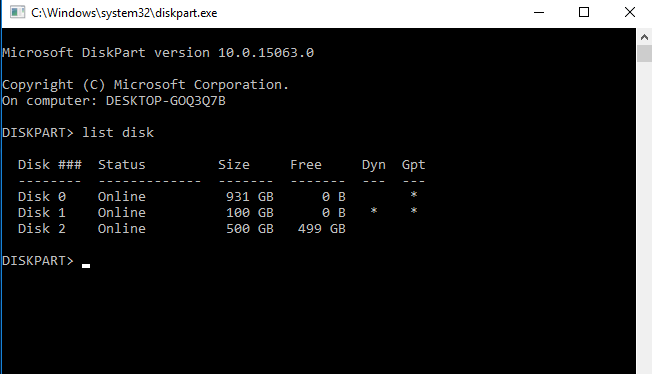
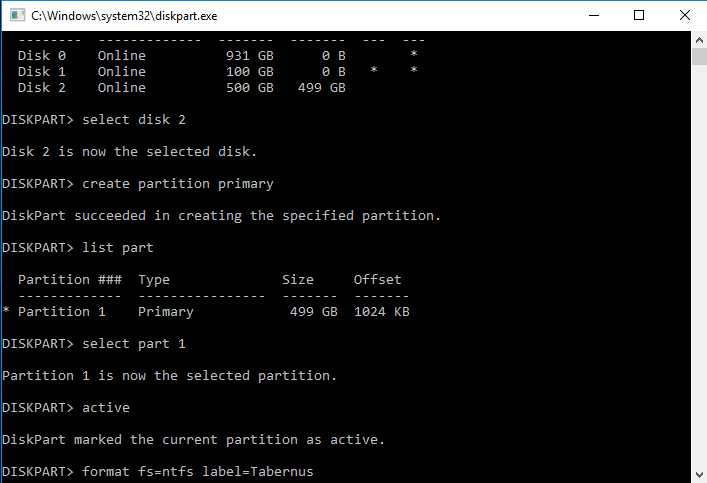
Thirdly, To format the USB key, enter "select disk X" (where X is the number of the USB key), then create a primary partition by entering "create partition primary", followed by "list part" to confirm the partition has been created. Next, select the partition by entering "select part 1", make it active by entering "active", and finally, format the drive with an NTFS file system by entering "format fs=ntfs label='Tabernus' (optional)".
How to easily partition USB drives?
The process of creating partitions using Diskpart may take some time, but it has a significant limitation: it cannot create FAT32 partitions larger than 32GB.
Many people will face a lot of headaches if they try to perform this operation. A simpler and more user-friendly solution is to use Qiling Disk Master Standard, a powerful and comprehensive partition manager that can help with various cases, including resizing partitions, moving them to different locations, and even converting them to different types.
● USB drive partition has been corrupted.
● To format a USB hard drive or memory card that the command line doesn't work, you can use the built-in Disk Management utility in Windows.
● Resetting and wiping out all existing data to become a blank USB drive.
● Make a bootable USB drive.
● Simply reset and reformat a USB drive.
This free tool allows you to partition USB flash drives to NTFS or FAT32 in various Windows versions, including Windows 11/10/8/7/XP.
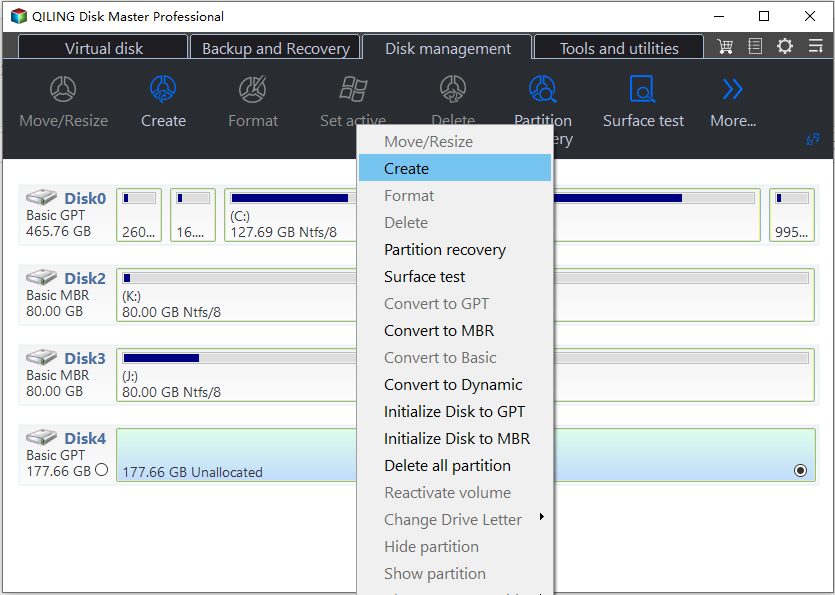
Step 1. Install and launch Qiling Disk Master. Right-click the USB drive and select "Create Partition".
Step 2. Specify the size and drive letter for the new partition, and optionally edit partition labels and file systems.
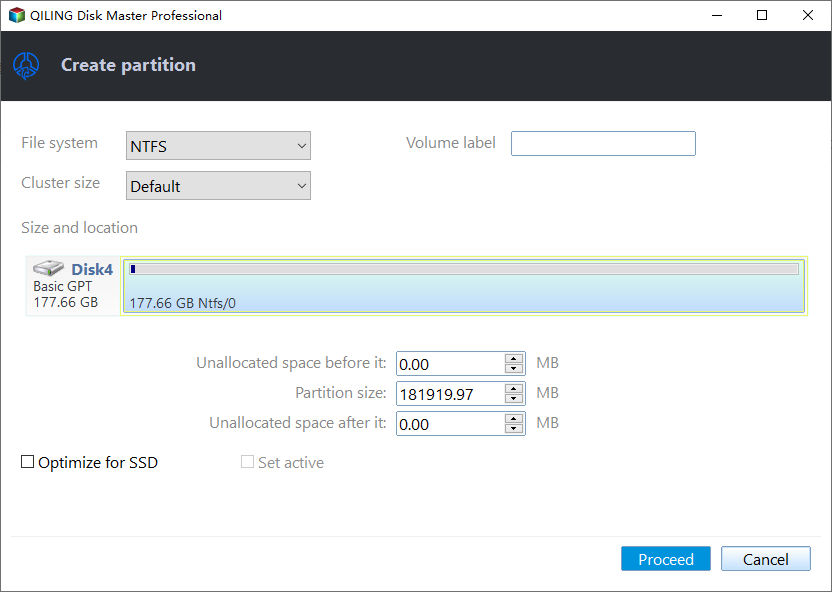
Step 3. To create a new partition on your USB drive, you can use a tool like Disk Management. Once you've opened Disk Management, you can right-click on the USB drive and select "New Partition" or "New Simple Volume". This will allow you to create a new partition, such as G:, on your USB drive.
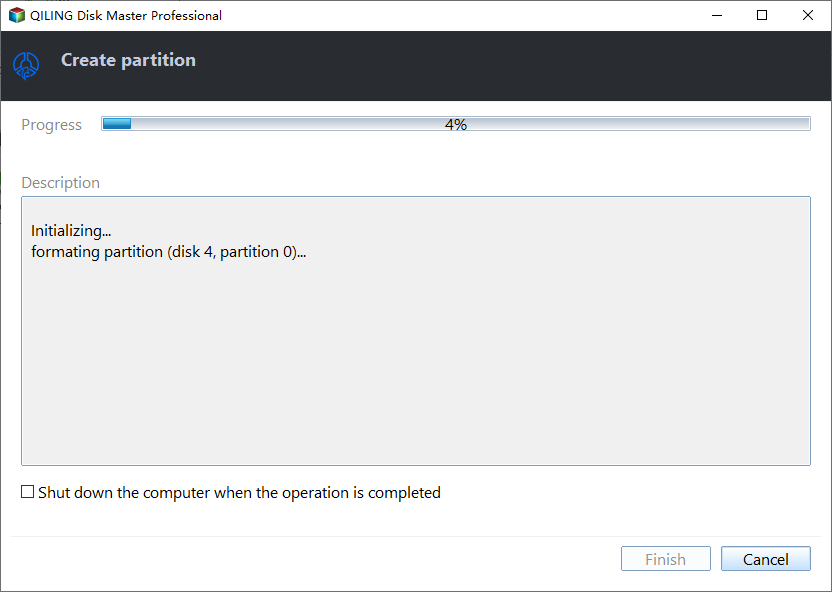
1. You can create partitions on your USB drive by using Qiling Disk Master, a tool that allows you to manage and manipulate disk partitions. To do this, you would need to follow the steps mentioned earlier, which involve using the Qiling Disk Master to create a new partition on your USB drive.
2. Due to Windows limitations, a removable device can only be recognized with its first primary partition, resulting in the second partition being unrecognizable in Windows Explorer, but it can still be accessible in other operating systems like Linux.
Conclusion
Here is how to create a partition on a USB drive in Windows. You can use Qiling Disk Master to easily partition the USB drive, avoiding the complicated instructions and restrictions of Diskpart, and also merge partitions or convert NTFS to FAT32 without data loss, but only after downloading and using it.
If you need more advanced features like cloning a disk, moving folders or installed apps, or migrating the operating system from GPT to GPT, you can upgrade to the Professional version of Qiling Disk Master.
Related Articles
- How to Increase C Drive Space in Windows Server 2003 without Data Loss?
You can increase Server 2003 (R2) C drive space using Diskpart utility or Qiling Disk Master Server. - How to Fix MBR in Windows 7 With or Without Installation CD or DVD?
This article provides a step-by-step guide on how to fix the Master Boot Record (MBR) in Windows 7, whether or not you have a Windows installation disc. - How to Format Windows 7 With CD Step by Step?
In this article, we will show you how to format Windows 7 with CD step by step. Besides, you can also learn how to format Windows 7 with a USB drive. - How to Ghost a Hard Drive of Windows 7/8/10/11 (Easy and Safe)
As for the task of ghosting Windows 7/8/10/11 hard drive, you have two effective ways, either imaging or cloning. Learn more about them now! - How to Solve "GPT-Formatted Disk. Legacy Boot Not Suppor"
Fixing the 'GPT formatted disk. Legacy boot not supported' issue can be resolved with some professional suggestions. - How to Use Gutmann Wipe Method to Securely Erase the Disk
This article will introduce the definition of Gutmann wipe and difference between Gutmann and other wipe methods. A stepwise guide will be included as well. -
Repartition a USB Drive
Back up a USB drive, remove old partitions, and create a cleaner layout. -
Create Multiple Partitions on a USB Drive
Divide a USB drive into separate partitions for boot files, tools, and ordinary storage.
Products
Articles & Tutorials
- Data Recovery
- Data Backup
- File Recovery
- File Backup
- File synchronize
- System Backup and Restore
- Disk and Partition Clone
- Technical articles
- Disk Master Help
- Windows Deleted File and Disk Recovery Tutorials
- Windows File and Data Recovery Tutorials
- More Windows Tutorials for Install, Security, Files, and PC Tips
- Windows Boot, Repair, and Recovery Environment Tutorials
- Windows Backup Tutorials
- Windows Restore Tutorials
- Windows Clone and Migration Tutorials
- Windows Server Backup, Recovery, and Management Tutorials
- Windows Disk, Partition, and Storage Management Tutorials