Excel Not Responding How to Save Your Work in Windows 10/11 [Multiple Ways]
If Excel is not responding when trying to save, edit, open, or close, don't panic! First, try to save your work by using the autosave feature, which can help restore the unsaved Excel workbook when reopening it. If that doesn't work, consider using data recovery software to recover your files. If the issue persists, try one of the six ways to fix the problem, which include [insert the 6 ways here].
If Excel files were deleted or missing, use Windows file recovery methods before saving new data to the same drive.
Microsoft Excel, a widely used form tool, often experiences issues, with many users encountering the problem of Excel not responding. This can be due to various reasons, including software conflicts, corrupted files, or hardware problems, which can cause the program to freeze or become unresponsive, leading to frustration and lost productivity.
- Microsoft Office does not have the latest update.
- Another process is using Excel.
- There is a conflict with another program, service, or add-ins.
- There is a problem due to the contents in an Excel file.
- The anti-The issue is that the virus software is not updated or is conflicting with the Excel program, leading to problems.
- Quick Navigation
- Part 1. Excel Not Responding How to Save Your Work in Windows 11/10
- Part 2. How to Fix the Issue "Excel Not Responding?"
Part 1. Excel Not Responding How to Save Your Work in Windows 11/10
Microsoft Excel not responding can be frustrating, but there are two simple methods to recover it. You can enable the "AutoSave" option in Excel, which automatically saves your document, so you don't have to save it manually. Alternatively, you can use document recovery or temporary file retrieval to retrieve your file, giving you a second chance to save your work.
Method 1. Using Document Recovery Feature
To recover an Excel spreadsheet that's not responding, you can use the document recovery feature. This feature allows you to recover unsaved work in Excel.
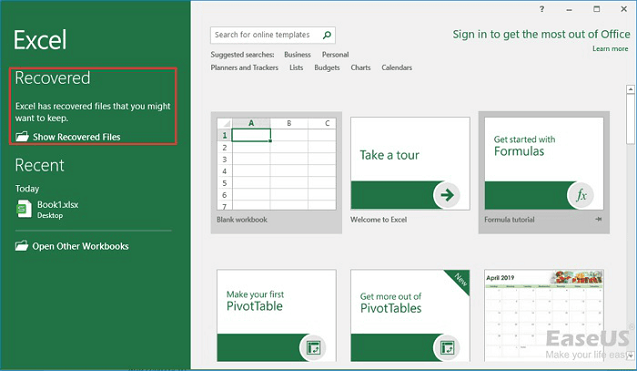
- To access recovered files in Excel, open the application and navigate to the main page. From there, click on "Recovered" and select "Show Recovered Files" from the dropdown menu. This will display a list of previously recovered files, allowing you to select and open the desired file.
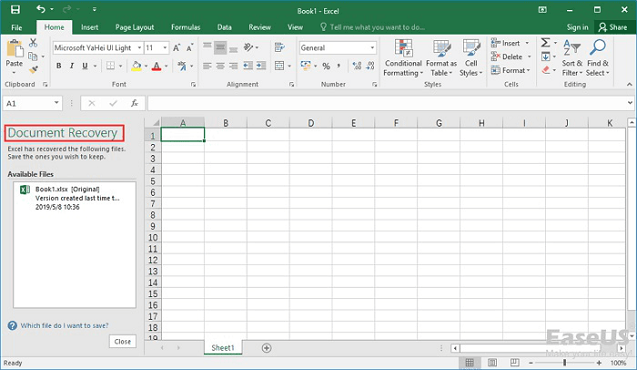
- The "Document Recovery" feature will show all unsaved documents, allowing you to open and save them.
Method 2. Saving from Temporary File
Temporary files act as backup files, allowing you to recover a document or spreadsheet in case the original file becomes corrupted or lost. In the context of Excel not responding, temporary files can be used to save a file and prevent data loss. To access temporary files, go to the following path: C:\Users\YourUsername\AppData\Local\Temp or C:\Users\YourUsername\AppData\Roaming\Temp. Here, you can find temporary files with a .
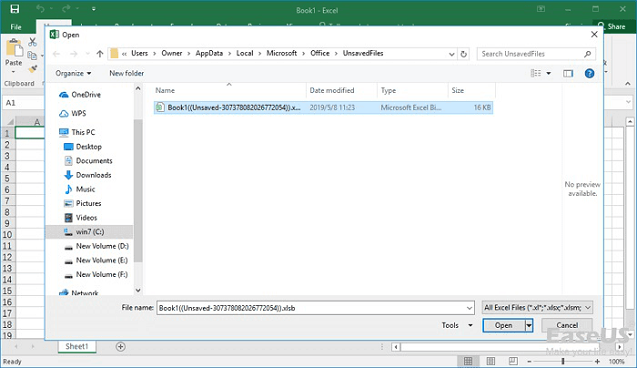
C:\Users\[username]\AppData\Local\Microsoft\Office\UnsavedFiles
Alternatively, use the steps below:
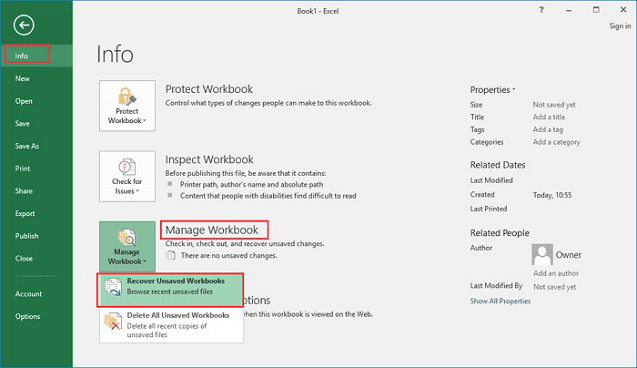
- To recover an unsaved Excel workbook, open Excel, go to "File", click on "Info", and then select "Manage Workbook". From the dropdown menu, choose "Recover Unsaved Workbooks".
- To fix Excel not responding, open the unsaved file and click the "Open" button to save it. This will resolve the issue and allow you to save the file.
Method 3. Recover Lost/Deleted/Unsaved Excel Workbook with Software
If Excel is not responding, you can try restarting the application, closing the program, or waiting for it to respond, or use Deep Data Recovery software to safely and effectively retrieve a lost or deleted Excel workbook.
Your Effective Excel Recovery Software
- The files you deleted using the "Shift + Delete" keys can be recovered using specialized software, such as Deep Data Recovery Wizard, Recuva, or Disk Drill. These programs scan your hard drive for deleted files and can recover them if they haven't been overwritten by new data.
- Files lost due to accidental deletion, improper operations, or incorrectly moving/copying files can often be recovered.
- Retrieving files from hidden or lost partitions of hard drive and other storage devices involves using specialized software and techniques to recover data from inaccessible or erased storage areas. This process typically requires a deep understanding of file system structures and the ability to navigate through complex data recovery scenarios.
- If your device shows up as RAW or formatted, it can be frustrating, but there's still hope to recover your data. Start by stopping any write operations to the device, as this can overwrite the data you're trying to recover.
How to Recover Lost, Deleted, and Unsaved Excel Workbook?
To resolve Excel sheets not responding issues and save your work, consider using Deep Data Recovery. You can download the free trial version from the official website, then follow the installation steps. This tool may help you recover your unsaved work and prevent data loss.
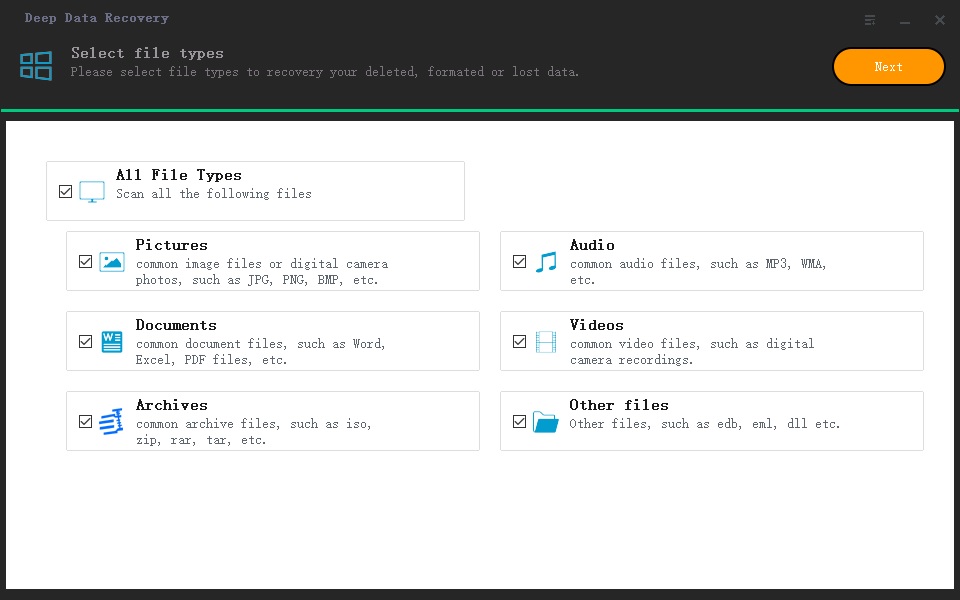
- To recover an Excel workbook using the Deep Data Recovery wizard, launch the wizard from the desktop and select only "Documents" when prompted, then press "Next".
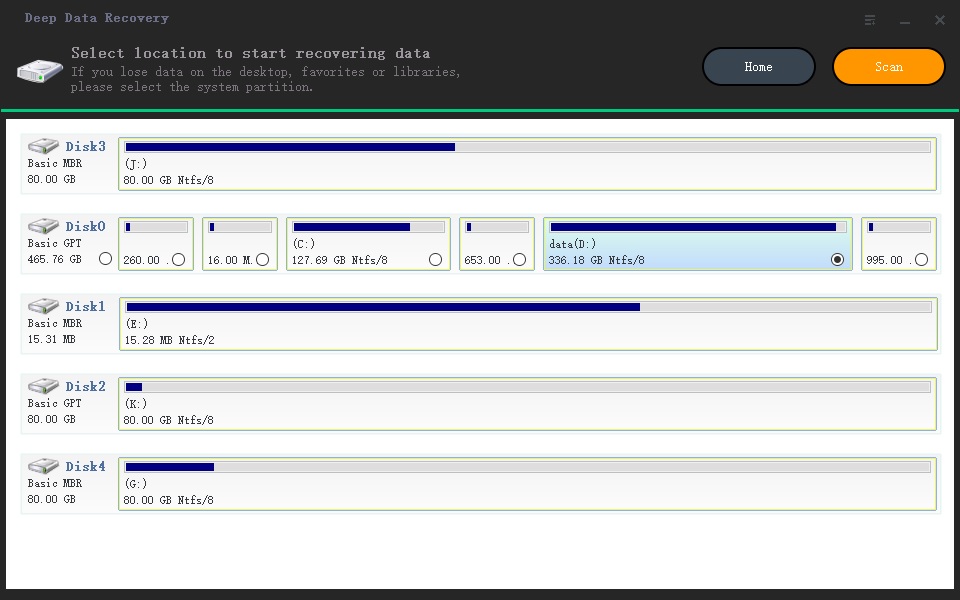
- The Disk Management tool will display the available partitions on your computer, including any external storage devices connected. Select the location where the Excel workbook was saved and press the "Scan" button to initiate the file recovery process.
- The time taken to complete the process will vary depending on the number of files, but once finished, Qiling will display all recoverable files in a folder, arranged in order. You can then browse the files by clicking the folder in the left pane, and view their content as a thumbnail preview by clicking on them. To select the essential files, simply click on them, and then click the "Recover" button to choose a path on an external storage device for the recovery process to complete.
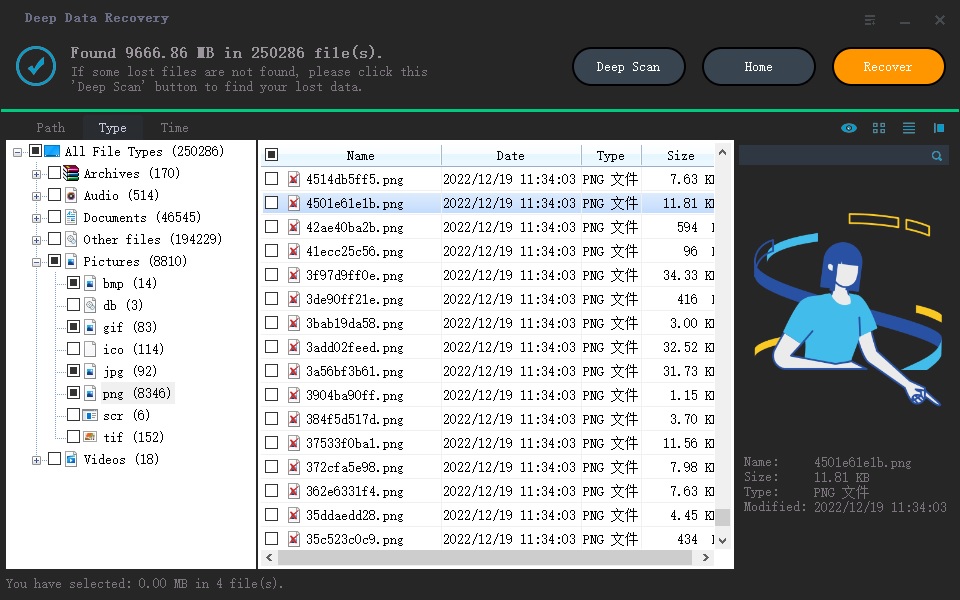
If additional files are available, you can use the "Deep Scan" mode, which scans sector-by-sector, making the process slower.
Part 2. How to Fix the Issue "Excel Not Responding?"
Solution 1. Opening Excel in Safe Mode
When Excel is unresponsive and won't save, you can try opening it in safe mode by pressing the "Ctrl" key while opening the application. Alternatively, you can open Excel using the command prompt by typing "excel.exe /safe" to resolve the issue.
Solution 2. Installing the Latest Microsoft Update
If you haven't updated the latest version of Microsoft Office, you'll face a process. To avoid this, it's recommended to turn on the automatic download and install feature, which allows the program to find updates, download, and install them automatically. This can be done by following a few simple steps, such as enabling the automatic update feature.
- Go to the "Control Panel". Then choose "System and Maintenance".
- Choose "Maintenance". Once the options expand, turn on "Automatic Maintenance".
- The following steps will help install Office updates.
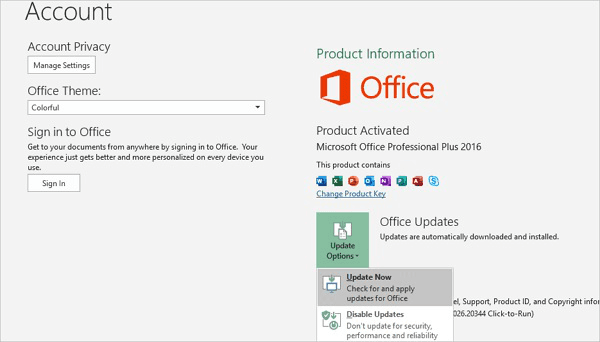
- Open Excel and head to File > Account.
- To resolve the issue where Microsoft Excel is not responding, go to the "Product Information" feature and select "Update Options". Then, click the "Update Now" button. This should resolve the issue.
Solution 3. Close Excel Progress Using Other Programs
Excel not responding when trying to save is due to other applications using it in the background, which can be identified by checking the status bar of the Excel window. When this occurs, Excel may throw errors and become unresponsive. To resolve this, it's recommended to save your work and close Excel before performing any further actions. This will ensure that you can complete your tasks without any issues.
Solution 4. Disabling Microsoft Office Add-ins
Disabling add-To resolve issues where Excel is not working correctly due to add-ins, follow these steps to disable them. First, open Excel and click on the "File" tab, then select "Options" from the list. In the Excel Options window, click on the "Add-ins" button, which is located in the left-hand menu. This will open the "Add-ins" window, where you can see a list of all the add-ins currently loaded in Excel.
- To start Excel in "Safe mode", press the "Ctrl" key and launch the Excel application. This will prevent any add-ins from loading, allowing you to use the program without any conflicts that might be caused by add-ins.
- Press File > Options > Add-ins.
- Now, choose "COM Add-ins" and press "Go".
- You can uncheck all the add-To resolve the issue, click on the "File" tab, then select "Options" from the drop-down menu. In the Excel Options window, click on the "Add-ins" tab. In the Manage dropdown menu, select "Disabled Items" and click "Go".
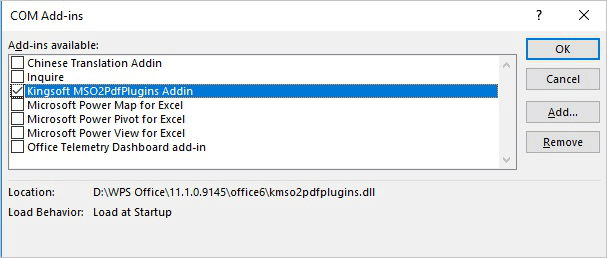
Note: If Excel usually is starting, you can re-enable the add-ins one-by-one. It will help you identify the add-in that is causing the problem.
Solution 5. Performing a Clean Boot
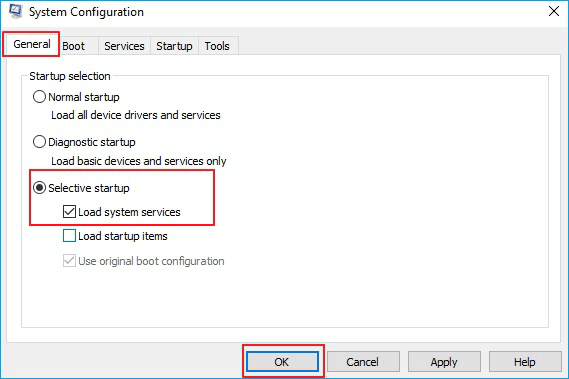
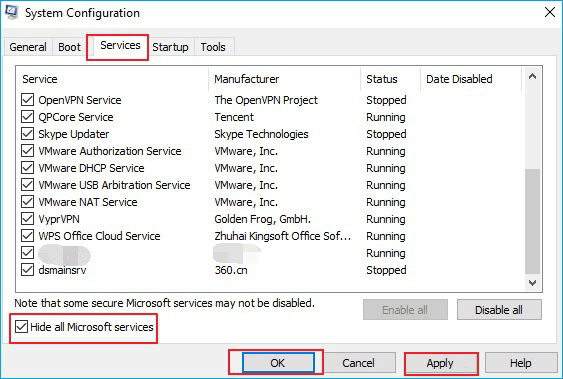
To troubleshoot Excel issues, try performing a clean boot to identify potential conflicts with background services and processes. Many applications start running when you turn on your PC, and a few may interfere with Excel. By performing a clean boot, you can isolate the problem and find the source of the issue. This process involves following a series of steps to restart your PC in a minimal state, allowing you to identify which services or processes are causing the conflict.
- To open the System Configuration Utility, simply type "msconfig" in the search bar.
- Select the "Selective startup" feature in the "General" tab, then check both the "Load System Services" and "Use original boot configuration" options.
- To disable all Microsoft services, go to the "Services" tab and click on "Hide All Microsoft Services" to view all services, then click "Disable all" to disable them all at once.
- To resolve the issue of Excel not responding, press the "Apply" and "Ok" buttons and then restart the Windows PC. After the restart, check if Excel is now responding as expected.
Solution 6. Repair Microsoft Office
- Open "Control Panel".
- Select "Programs and Features".
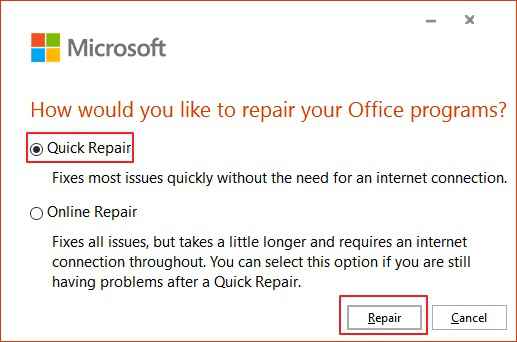
- Locate "Microsoft Office". Right-click it and click the "Change" button.
- To troubleshoot Excel not responding when trying to save, a repair window will open. Select the "Quick Repair" feature, press the "Repair" button, and complete the process. If the issue persists, select "Online Repair" to resolve the problem. After completing either repair process, check if the issue still exists. If it does not work, further troubleshooting steps may be required.
Related Articles
- How to Fix Excel Cannot Open the File Because the Extension Is Not Valid Windows 10/7
- How to Recover Overwritten or Replaced Photos, Excel, Word files
- How to Fix Corrupted Video Files After Recovery
- How to Fix Photo App Not Working in Windows 10
- How to Fix 'There was a problem resetting your PC' Error in Windows 10
- How to Fix 0x80240fff Windows 10 Update Error
- [Fix] Convert External Drive to APFS Failed/Greyed Out/Not Available
- [Solved] Recycle Bin Not Showing Deleted Items
- [Solved] 3 Ways to Fix 'Windows Could Not Complete the Installation' in Windows 10
Products
Articles & Tutorials
- Data Recovery
- Data Backup
- File Recovery
- File Backup
- File synchronize
- System Backup and Restore
- Disk and Partition Clone
- Technical articles
- Disk Master Help
- Windows Deleted File and Disk Recovery Tutorials
- Windows File and Data Recovery Tutorials
- More Windows Tutorials for Install, Security, Files, and PC Tips
- Windows Boot, Repair, and Recovery Environment Tutorials
- Windows Backup Tutorials
- Windows Restore Tutorials
- Windows Clone and Migration Tutorials
- Windows Server Backup, Recovery, and Management Tutorials
- Windows Disk, Partition, and Storage Management Tutorials